Expert Advice · Training · 8 min read
Dog listens at home but not outside? How to fix it
Dogs do not carry a skill to new places by themselves. A sit in the kitchen is a different job from a sit in the park. Practise in many places, make it easier outside at first, use better rewards, and add distractions one step at a time.
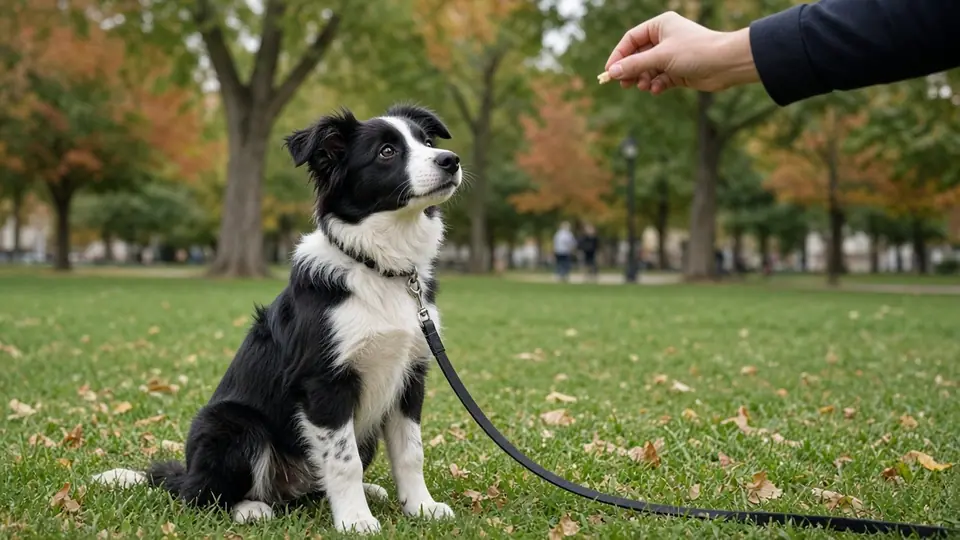
If your dog listens at home but not outside, the skill has not travelled yet. Dogs learn a cue together with the place they learned it in, so a sit in the kitchen and a sit in the park are different jobs. Practise in many places, make it easier outside at first, carry better rewards, and add distractions one step at a time. Recall in a busy park has its own page, long-line park recall; this page covers every skill that stops working outdoors.
I am Andrew Darov, a dog trainer. I am not a veterinarian. This is a training page about using skills in new places.
Why does a dog listen at home but not outside?
The dog learned the skill in the kitchen, with no smells, no dogs and a treat bag nearby. Outside is a new test it has never practised.
At home, the room is quiet and you are the most interesting thing in it. Outside, the dog has smells, other dogs, people, birds, traffic and wind. Your voice and your treats compete with all of that.
Dogs also learn the whole picture around a cue: your position, the room, the time of day, even the treat pouch. Change the picture and the cue can look new. That is why a dog who sits perfectly in front of the fridge may stare blankly at you on the pavement. It is not stubbornness. The skill simply has not been practised there.
How do you get a dog to listen outside?
- Start just outside the door. Practise in the garden or yard, on the doorstep, or at the front gate before going anywhere busy. Then a quiet street, a car park at a quiet time, the edge of a park.
- Make it easier. Outside, ask for less than at home. A one-second sit, a recall from two steps, a down without waiting. You will raise the bar again once the dog gets it right most of the time in that place.
- Use better rewards. Bring soft, smelly food the dog loves and reward more often than at home. Sniffing, a short game or going to greet a friend can be rewards too.
- Add one thing at a time. Change only one thing per session: a new place, more distance, more time, or a distraction. If you add two at once and the dog fails, go back to the last step that worked.
- Keep sessions short. Three to five repeats, then a sniff break. Several short sessions on a walk beat one long one.
How to raise the bar without breaking the skill is on markers and rules, and common ways to raise it too fast are on raising the bar too fast.
How often should you reward outside?
Much more often than at home, at least at first. At home a dog may do several sits for one treat; outside, reward every correct try. The idea of keeping rewards frequent while you teach is on how often to reward. Fade the rewards slowly once the skill holds in that place.
Which places should you practise in?
Build a short list of places from easy to hard and work down it over a few weeks. For most dogs it looks like this:
- The garden, yard or balcony. Familiar, fenced, with some smells.
- The doorstep or front gate. People and cars pass at a distance.
- A quiet street or car park. New smells, few distractions, at a quiet hour.
- The edge of a park. Other dogs far away, on a long line.
- Busier places. A shopping street, a café terrace, a busier part of the park.
Stay in each place until the dog gets it right most of the time, then move on. A bad day is normal; go back one place for a session or two.
Does the skill need to be practised in every place?
No. After a skill has been practised in five or six different places, most dogs start to get it right in new places much faster. The early places are the slow part. Keep visiting a new spot now and then, and the skill keeps working.
What if the dog is too excited to eat?
A dog who will not take food is too close to the distraction or too wound up. Move further away from the other dogs or the busy path, wait for the dog to sniff the ground and settle, then try again. Taking food is a good sign that the dog can learn.
What about recall outside?
Use a long line in open spaces until the dog comes back every time in several places with real distractions. Coming when called at home does not mean coming when called near other dogs. See long-line park recall for the steps.
What are the usual mistakes?
- Repeating the cue louder. The dog learns that the first two words do not count.
- Going from the kitchen straight to the park. Skip the middle steps and the skill falls apart.
- Using the same dry treats as at home. They cannot compete with a squirrel.
- Long sessions. A tired, bored dog stops listening.
- Letting the dog off lead too early. Use a long line until recall holds in many places.
Skills travel when you take them to new places one step at a time. Start with markers and rules, keep rewards frequent with how often to reward, and build recall on a long line with long-line park recall. More on the training hub.
Questions on this page
Why does my dog listen at home but not outside?
Dogs learn a skill together with the place they learned it in. Outside there are smells, other dogs, people and noise, and the dog has never practised there. It is not stubbornness; the dog simply has not learned the skill in that setting yet.
Is my dog being stubborn outside?
Usually not. Most dogs who ignore cues outside are distracted, excited or unsure, and the reward on offer is weaker than everything else around them.
What treats work best for training outside?
Soft, small, smelly food the dog loves more than its normal treats, such as small pieces of cooked chicken or cheese. Keep the best food for outdoor practice only.
How many places should I practise in?
Aim for at least four or five different places before you expect a skill to work somewhere new: the garden, the front of the house, a quiet street, a car park, then a park at a quiet time.
Should I let my dog off lead if it comes when called at home?
Not yet. Use a long line outside until the dog comes back reliably in several places with real distractions. Recall at home does not mean recall in the park.
Work with me
A $150 consultation or $500 monthly curatorship. Opens WhatsApp to Andrew.