Expert Advice · Puppy · 7 min read
Puppy pees right after coming inside? How to fix it
A puppy who pees indoors straight after a trip outside usually came in too soon or got distracted. Boring trips, a longer wait, a reward on the spot and a lead in the garden fix most cases in one to two weeks.
If your puppy pees right after coming inside, the toilet trip usually ended before the puppy finished. Make trips boring, take the puppy to one spot on a lead, wait about five minutes, reward the moment it pees outside, and keep the puppy close for the first minutes back indoors. The full house training plan, including pads and indoor setups, is on potty training; this page owns the “just came in and peed” problem.
I am Andrew Darov, a dog trainer. I am not a veterinarian. This is a puppy page about toilet habits at home.
Why does a puppy pee as soon as it comes back in?
The puppy came in with a half-full bladder. Outside was too interesting, too short or too uncomfortable to finish.
Young puppies have small bladders and a short attention span. Outside there are smells, leaves, birds and you. A puppy may do a tiny pee, start exploring and forget the rest. Back inside, the house is warm and quiet, the puppy relaxes, and the bladder empties on the rug.
Other common reasons:
- The trip was a play session. If you throw a ball or chat, the puppy treats the yard or garden as a playground.
- You went in too soon. Many puppies need three to five minutes before they settle to pee.
- Rain, cold or a hard surface. Some puppies hold it rather than pee on wet grass or cold paving. The rainy-day potty plan for flats covers this.
- The reward came at the door. If the treat comes when you are back inside, the puppy learns that coming in is the good part.
- Going outside is the only time it is alone with you. Some puppies stall to make the trip last.
How do you make toilet trips work?
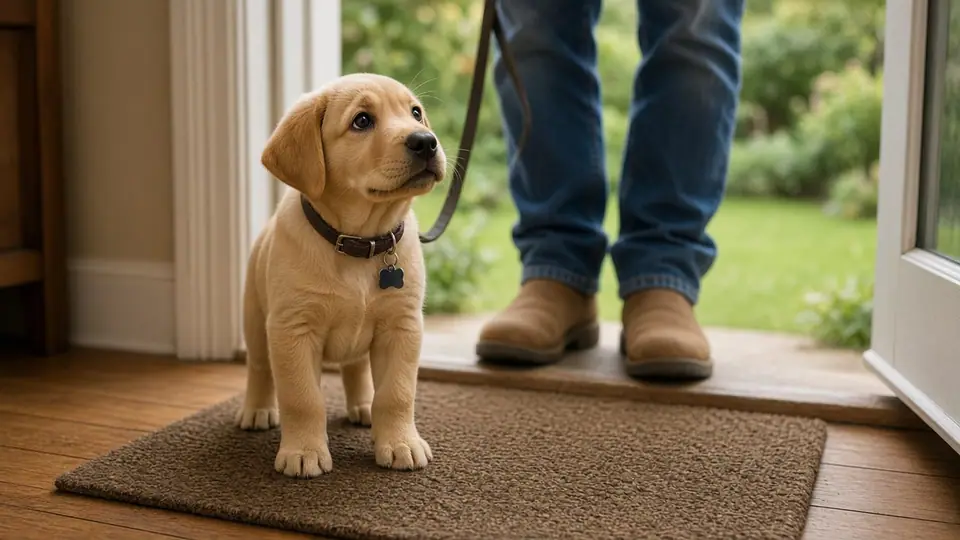
- Go to one spot on a lead. Use the same patch of grass or the same corner every time. A lead, even in your own garden, keeps the puppy there and stops it from wandering off to explore.
- Wait about five minutes. Stand still and stay quiet. Let the puppy sniff the spot. Phones away, so you see the moment it starts.
- Reward the moment it finishes. Say “yes” as the puppy finishes and give a treat right there. Keep treats in your pocket so the reward lands outside.
- Wait one more minute. Many puppies do a second pee or a poo shortly after the first. Stay another minute and reward again if it happens. After that, a short sniff around or a quick game is fine as a bonus.
- Watch the first minutes indoors. If nothing happened, go in, put the puppy in its crate or keep it on a lead next to you for ten to fifteen minutes, then go out and try again.
Most puppies get the idea within one to two weeks of steady, boring trips. Keep a short note of times for a few days. You will see a pattern, and the timing guide on how often puppies need to pee helps you plan trips by age.
What should you do right after the puppy comes in?
The first ten to fifteen minutes indoors are when most of these accidents happen. Keep the puppy where you can see it: on a lead beside you, in a pen, or in the crate with a chew. If you see sniffing in circles or a sudden walk toward a corner, pick the puppy up calmly and go straight back out to the same spot.
If an accident happens, do not scold. Clean with an enzyme cleaner so the smell does not draw the puppy back. A puppy who is told off often starts to hide behind the sofa to pee, which makes things harder.
Does weather or surface matter?
Yes. Some puppies refuse wet grass, cold paving or wind. On those days use a sheltered corner, hold an umbrella over both of you, and keep the wait boring. Short puppies and small breeds may need a quick towel dry afterwards. If your puppy grew up on pads or newspaper, it may prefer a soft surface at first, and a slow move outdoors helps.
When could it be a health issue?
Ask your vet if the puppy pees very often in small amounts, strains, whines while peeing, drinks far more than usual, or you see blood. Accidents that suddenly start in a puppy who was doing well are also worth a vet visit. See when to call the vet.
What are the usual mistakes?
- Letting the puppy off lead to “find a spot”. It finds a game instead.
- Talking and playing during the trip. Keep it dull until the pee is done.
- Giving the treat back at the door. Reward outside, as the puppy finishes.
- Giving up after one minute. Wait about five.
- Free run of the house straight after a trip with no pee. Crate or lead for ten to fifteen minutes, then try again.
- Scolding accidents. It teaches hiding, not where to go.
Keep trips short and boring, reward outside, and watch the first minutes back in. The full plan is on potty training, with toilet gaps by age in how often do puppies need to pee and wet-weather tips in the rainy-day potty plan. More on the puppy hub.
Questions on this page
Why does my puppy pee right after coming inside?
Most often the puppy did not finish outside. It got busy sniffing, playing or watching things, you came back in, and the full bladder caught up a minute later on the warm, quiet floor. Some puppies also find indoor floors easier to use than wet grass or cold paving.
How long should I wait outside for my puppy to pee?
Give the puppy about five minutes of quiet, boring time at the toilet spot. If nothing happens, go back in, keep the puppy in the crate or on a lead next to you for ten to fifteen minutes, and try again.
Should I tell my puppy off for peeing inside?
No. Telling a puppy off teaches it to hide when it pees, often behind furniture, and it does not show the puppy where to go. Clean up with an enzyme cleaner and look at what to change on the next trip.
Should I keep my puppy on a lead in the garden?
Yes, during potty training. A lead keeps the puppy at the toilet spot instead of exploring the yard or garden, so the trip stays short and you can see when it has finished.
When should I ask the vet about frequent peeing?
Ask your vet if the puppy pees very often in small amounts, strains, cries while peeing, drinks much more than usual, or has blood in the urine. These can point to a medical problem that training will not fix.
Work with me
A $150 consultation or $500 monthly curatorship. Opens WhatsApp to Andrew.