
Expert Advice · Skills · 8 min read
How to brush a dog that hates it: calm, short sessions
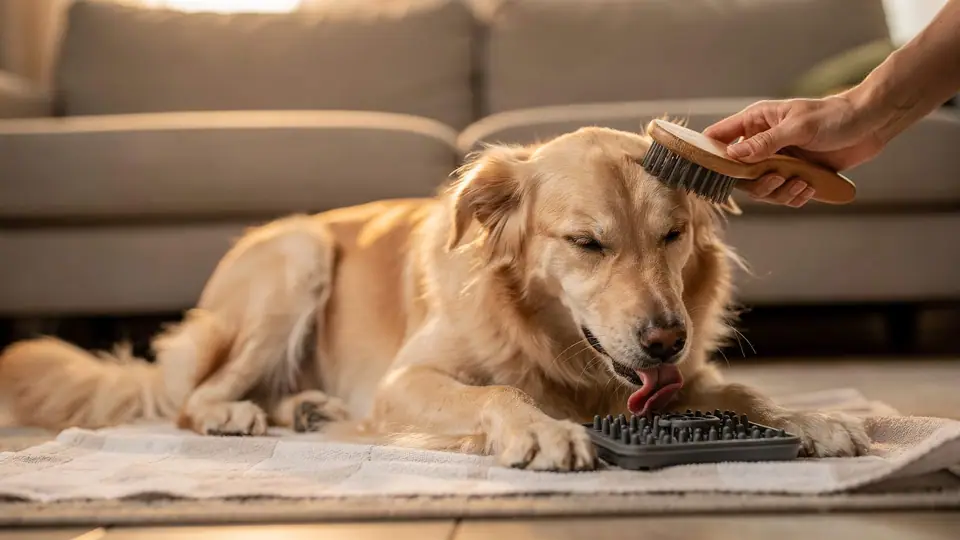
Dogs that fight the brush usually find it too long, too rough or too sudden. Brush one small area for a few seconds while your dog licks food from a lick mat, stop before it wriggles, and build up over days. Leave mats and big coat jobs to a groomer.
To brush a dog that hates it, keep sessions very short: brush one small, easy area for a few slow strokes while your dog licks food from a lick mat, then stop before it wriggles. Add a little more over days, one area at a time, and leave mats and clipping to a groomer. If your dog also dislikes having its paws, ears or mouth touched, start with the touch steps on puppy handling, which work for adult dogs too.
I am Andrew Darov, a dog trainer. I am not a veterinarian. This is a skills page about calm, cooperative grooming at home.
Why do some dogs hate being brushed?
Most brushing fights come from sessions that are too long, too rough or too sudden, not from a “bad” dog.
Common reasons:
- Pulling. A brush that catches on knots hurts, and the dog remembers.
- Being held still. Many dogs dislike being pinned more than the brush itself.
- Sensitive spots. Paws, tail, belly, back legs and ears are touchy for many dogs.
- Too long. The first minute was fine; the next ten were not.
- Never learned. Dogs that were not brushed as puppies may find it strange.
- Soreness. Sore skin, ears or joints can make brushing hurt. Ask your vet if your dog flinches at one spot or the skin looks red or sore.
What do you need before you start?
- A soft brush that suits your dog’s coat. Your groomer can tell you which type.
- A lick mat with soft food spread thinly on it, or a food toy. A second person can hold it, or you can stick it to a wall or the floor.
- A towel or non-slip mat in a quiet spot, so your dog can stand or lie without sliding.
- Small, tasty treats for after each short session.
How do you brush a dog that hates it, step by step?
- Set up a calm spot. Quiet room, a non-slip mat, the brush on the floor nearby, the lick mat ready. Let your dog sniff the brush and give a treat. That is the whole first session for some dogs.
- Start on an easy area. Put the lick mat down. While your dog licks, brush the shoulder or the side of the chest for three to five slow strokes, in the direction the fur grows. Light pressure only.
- Stop before your dog wriggles. End the session while your dog is still relaxed and licking. Then lift the lick mat away. Brush on, food on; brush off, food off. If your dog stops licking, turns its head to the brush or moves away, you went too far; do less next time.
- Add one new area at a time. Over days, move to the back, then the chest, then the outside of the legs, the tail and the paws. Add strokes slowly. Two or three short sessions a day beat one long one.
- Use a groomer for mats and big jobs. Mats close to the skin, clipping, and full coat work on heavy shedding breeds are often better left to a groomer. Keep up the short home sessions so the visits get easier too.
How long should each session be?
At the start, 30 seconds to two minutes. That feels too short, but it is how a dog that hates the brush learns that brushing is boring and safe. Once your dog stays relaxed through a whole short session for several days, add a little more time or a new area. Change only one thing at a time: a longer session, or a new spot, or a new brush, not all three.
Long or thick coats may need daily short sessions to stay free of knots. Short coats often need much less. Ask your groomer how often your dog’s coat needs it.
How do you brush the tricky spots?
Paws, tail, belly and back legs come last. Before you brush them, practise just touching them with your hand, a treat for each touch, as on puppy handling. Then touch with the back of the brush, then one stroke, then two.
A chin rest helps a lot here. If your dog learns to rest its chin on your hand or a cushion and hold still for food, it can tell you when it is ready, and lift its chin to say “pause”. The chin rest page shows how to teach it. For paws, the nail trim ladder uses the same small steps, and teach paw makes lifting a paw easy.
What about knots and mats?
Small knots: hold the fur near the skin between your fingers, so the pull is on your hand and not on the dog, and tease the end of the knot out slowly. Stop if your dog tenses.
Mats close to the skin: leave them for a groomer. Cutting mats with scissors at home is a common way to cut the skin. If the coat is badly matted, a short clip and a fresh start is often kinder than hours of brushing.
When should you stop and get help?
Stop the session and step back if your dog growls, lifts a lip, freezes or snaps. The growl is a warning, and it means the session went too far. Next time, do less on an easier spot.
Ask your vet if your dog suddenly hates brushing it used to accept, flinches at one spot, or has red, sore or flaky skin. See when to call the vet. If your dog snaps every time, or the fear is getting worse, work with a qualified trainer in person.
What are the usual mistakes?
- Brushing the whole dog in one go. One area for a few strokes is plenty at first.
- Holding the dog down. It makes the next session harder. Food and short sessions do the work.
- Pulling through knots. Hold the fur at the base and work slowly, or leave mats to a groomer.
- Starting with the paws or tail. Start where your dog is easy to touch.
- Brushing only when the coat is a mess. Short regular sessions mean fewer knots and less pulling.
A dog that hates the brush can learn to put up with it, and often to enjoy it, with short sessions, food and one small step at a time. Next steps: puppy handling for touch practice, chin rest so your dog can say “ready”, and the nail trim ladder for paws. More on the skills hub.
Questions on this page
Why does my dog hate being brushed?
Common reasons are sessions that go on too long, a brush that pulls on knots, being held still, and touching sore or sensitive spots such as paws, tail, belly or ears. Some dogs were never brushed as puppies. Short, gentle sessions with food fix most of it.
How do I brush a dog that hates it?
Brush one small area for a few strokes while your dog licks food from a lick mat, then stop and let it go. Start with an easy spot such as the shoulder. Add a little more over days, and stop before your dog starts to move away or mouth the brush.
How long should a brushing session be?
For a dog that dislikes it, start with 30 seconds to two minutes. Several short sessions a week work better than one long fight. Long coats may need daily short sessions; your groomer can tell you how often your dog's coat needs it.
What should I do if my dog growls or snaps at the brush?
Stop, step back and end the session calmly. The growl means the session went too far. Next time do less, on an easier spot. If your dog snaps or growls every time, or one spot seems sore, ask your vet, then get help from a qualified trainer.
When should I use a groomer instead?
Book a groomer for mats close to the skin, a coat that needs clipping, or a dog that is too stressed for home brushing. Cutting mats out with scissors at home can cut the skin. Keep up short home sessions so the groomer visits get easier too.
Work with me
A $150 consultation or $500 monthly curatorship. Opens WhatsApp to Andrew.