
Expert Advice · Expert Advice · 10 min read
When do Labs calm down? Age, energy and settle
Labs rarely flip a calm switch at one birthday. Energy shifts with age; settle skills and food work make the house livable while the brain catches up.

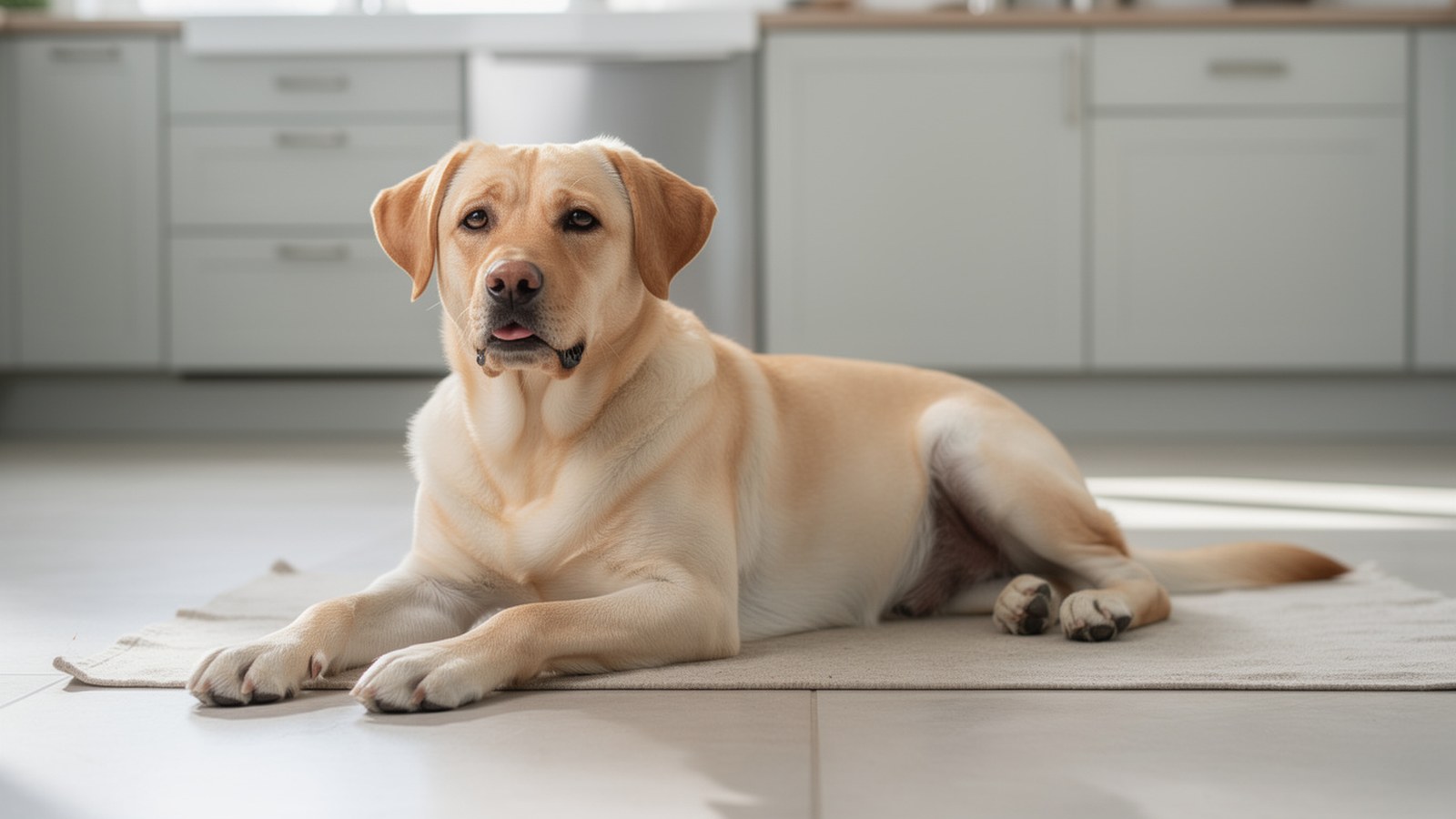
When do Labs calm down? Most Labrador Retrievers stay busy through adolescence and keep evening out into maturity around two to three years, with plenty of individual spread. There is no single birthday that invents an off switch. Softening comes from age plus sleep, settle skills and the right kind of work, not from endless fetch alone. Start with the Labrador Retriever breed guide for temperament and energy context. The general teenage season lives on adolescent 6–12 months. This page owns the Lab-shaped version: age bands, why teens look worse, and a settle-plus-food plan.
I am Andrew Darov, a dog trainer. I am not a veterinarian. This is a life page about expectations and house management.
When do Labradors usually calm down?
Age softens Labs. Skills and rest make the house livable while you wait.
Rough working bands, not promises:
- Puppy (to ~6 months): short wakes, lots of sleep, mouthy play. Enforce naps.
- Adolescent (~6–18 months): bigger body, selective hearing outdoors, jumping and stealing peak. Skills drop under distraction.
- Young adult (~18–36 months): many Labs settle more if rest and manners were protected. Some working lines stay busier longer.
- Mature adult: calmer evenings for many dogs, still needing walks, sniffing and a job.
Field and working lines often stay sharper than pets bred for sofas. Neutering status, health and how the dog is exercised all shift the curve. Treat “Labs calm at two” as a common story, not a contract.
Why do teenage Labs seem worse than puppies?
Muscles grow faster than self-control. A puppy who could not reach the counter becomes an adolescent who can. Park smells get more interesting than your voice. Guests at the door turn into a full-body greeting.
That is the same adolescent pattern described on adolescent 6–12 months, with Lab volume turned up: retrieving drive, mouthiness and social appetite. Calling it “stubborn” usually means the bar was too hard for that day. Drop distraction, shorten the session, reward what you want.
How do you help a busy Lab settle at home?
Two tracks: manage the practice of chaos, teach an off switch.
- Protect rest after walks. Gated room or known crate for a real quiet stretch. A Lab who paces the kitchen all evening stays loud.
- Teach a mat or place. Quiet room first. Reward lying down. Then move the mat toward the kitchen and TV. Details on place.
- Use food as work. Scatter part of a meal in grass or on a snuffle mat. Offer a stuffed food toy on the mat while you cook. Sniffing and chewing lower the volume better than one more ball throw.
- Keep training slots short. Several three-to-five minute sessions beat one long drill with a wired dog.
- Manage doors. Lead, gate or pen before guests enter so jumping and mouthing do not get free practice.
US yards can host sniff walks; UK flats need the street walk to carry sniffing. Either way, run-until-collapse is a poor calm plan. Pair movement with settle.
How much exercise does a Lab need?
Enough to meet the body, not so much that the dog comes home frantic. Most pet Labs do well with daily walks that include sniffing, a short training or retrieve game with a clear end, and protected rest. Endless tennis-ball cycles often raise excitement instead of teaching an off switch.
A useful pattern for many households:
- Morning walk with sniffing allowed on a long enough lead where safe.
- Short skill session (mat, sit for greeting, hand target) before breakfast leftovers of training food.
- Midday toilet and a quiet rest block.
- Afternoon or evening walk, then mat settle with a stuffed food toy while people cook.
- Last toilet, then lights-down calm, not a wrestling match with kids.
If your Lab suddenly cannot settle, limps after play, collapses or shows other new signs, ask your vet before you add more miles. This page does not set veterinary exercise limits.
What does “calm” look like for a Lab?
Calm is not frozen. A settled Lab can lie on a mat, chew quietly, watch the room soft-eyed, and get up for a toilet trip without launching at the door. Soft mouth, loose body, able to take a food reward on the floor.
Still on the teenage ladder: bouncing at every latch, mouthing sleeves in greeting, stealing every sock, and pacing after a long run. Those need more management and shorter wins, not a louder “no.”
Breed type matters. A pet Lab from quieter lines may look “done” earlier than a dog from working retrieving stock. Read your dog against the Labrador Retriever guide, then build the house plan you actually have, not the Instagram Lab who naps through dinner parties at nine months.
What are the usual mistakes?
- Waiting for a magic birthday. Teach settle now; age helps later.
- Only adding more running. Pair walks with mat work and chewing.
- Long chaotic play with children. Gate breaks and adult supervision keep everyone safer.
- Free door access for every guest. Teenage Labs practice the blast you hate.
- Skipping rest because “Labs need to burn energy.” Sleep is part of the plan.
- Comparing your 14-month Lab to a neighbour’s 7-year-old. Use the breed guide and the adolescent page as the frame.
Keep this page next to the Labrador Retriever guide, adolescent 6–12 months for the general teenage map, and place for the mat skill. More household stages sit on the life hub.
Questions on this page
When do Labradors calm down?
Most Labs are still very busy through adolescence (roughly 6–18 months) and keep softening into maturity around 2–3 years, with big individual spread. There is no single birthday that flips a switch. Breed type, exercise type, sleep and training all matter. See the Labrador Retriever breed guide for temperament context.
Why is my teenage Lab worse than as a puppy?
Adolescence brings bigger muscles, more interest in the world and a brain that drops skills under distraction. A puppy who sat for guests can turn into a bouncing adolescent. That season is normal. Manage doors and food, keep sessions short, and protect rest. The adolescent 6–12 months page owns the general season.
How much exercise does a Lab need to calm down?
More running alone rarely invents an off switch. Labs usually need walks with sniffing, short training games and real rest, not endless ball until they wobble. A tired frantic Lab is still frantic. Pair movement with settle on a mat and food puzzles. Pain or sudden change in energy is a vet question.
How do I teach my Lab to settle in the house?
Teach a mat or place skill in a quiet room, reward lying down, then bring it toward busier rooms. Use a baby gate so the Lab cannot practise door chaos while you cook. Short food work (scatter feeding, snuffle mat, stuffed toy) buys calm minutes. Place training details live on the place page.
When is Lab energy a health or help question?
Sudden restlessness with other signs, limping after exercise, collapse, or aggression that is new needs your vet or a qualified professional. This page is about age expectations and house management, not diagnosis.
Work with me
A $150 consultation or $500 monthly curatorship. Opens WhatsApp to Andrew.