
Expert Advice · Puppy · 9 min read
Puppy peeing in crate: why it happens and how to fix it
Most crate accidents come from a crate that is too big, a stretch that is too long, bedding that soaks it up, or a stressed puppy. Fix the cause, clean well, and keep the next weeks easy to win.

Puppy peeing in the crate usually means the crate is too big, the stretch inside was longer than the puppy’s bladder can manage, the bedding soaks the pee away, or the puppy is stressed in there. Fix the cause, clean with an enzyme cleaner, and go back to short stays the puppy can win. For measuring and dividers in detail, see puppy crate size. This page covers what to do once accidents have started.
I am Andrew Darov, a dog trainer. I am not a veterinarian. This is a puppy page about crate accidents and how to stop them.
Why does a puppy pee or poo in the crate?
A clean crate depends on four things: the right size, the right length of stay, bedding that shows a mess, and a puppy who is relaxed inside.
Puppies are born with a pull to keep their bed clean, and good breeders build on it. That pull is real, but it is weak at 8 to 12 weeks and easy to undo. The common causes:
- The crate is too big. The puppy can pee in one corner and sleep in the other, so it does.
- The stay is too long. A young puppy cannot hold it through a long afternoon or a full night. When it has to go, it goes.
- Soft bedding. A thick bed soaks pee up and the puppy can push it to one side and lie on the dry part.
- Stress. A puppy that pants, scratches the door or screams in the crate may pee or poo from upset, not from a full bladder.
- Habit from before. Puppies raised in a dirty pen or a pet shop cage may have learned that toileting where they sleep is normal.
- A health problem. Many small pees, straining or a big change in drinking need a vet, not a training plan.
How can you tell which cause it is?
Look at when and how it happens for a few days. A quick note on your phone is enough.
| What you see | Likely cause |
|---|---|
| Pee in one corner, puppy sleeping in the other | Crate too big |
| Accidents near the end of long stays or late at night | Stay too long |
| Wet bedding pushed into a heap, dry tray | Bedding soaks it up |
| Puppy frantic, drooling, chewing the bars, accident within minutes | Stress inside the crate |
| Small pees many times a day, in and out of the crate | Ask your vet |
If the puppy is upset in the crate, start with crate training basics before you worry about the toilet side. A frightened puppy will not learn to hold it.
How do you stop crate accidents?
Work through the causes in order. Most puppies are clean again within one to two weeks once the setup fits.
- Fit the crate. The puppy should be able to stand, turn round and lie flat on its side. Anything more is spare floor. Put a divider in a big crate and move it back as the puppy grows.
- Shorten every stay. Match crate time to age, not to your diary. The rough limits by age live on how long a puppy can stay in a crate. Take the puppy out to the toilet straight after every nap, before it has a chance to go inside.
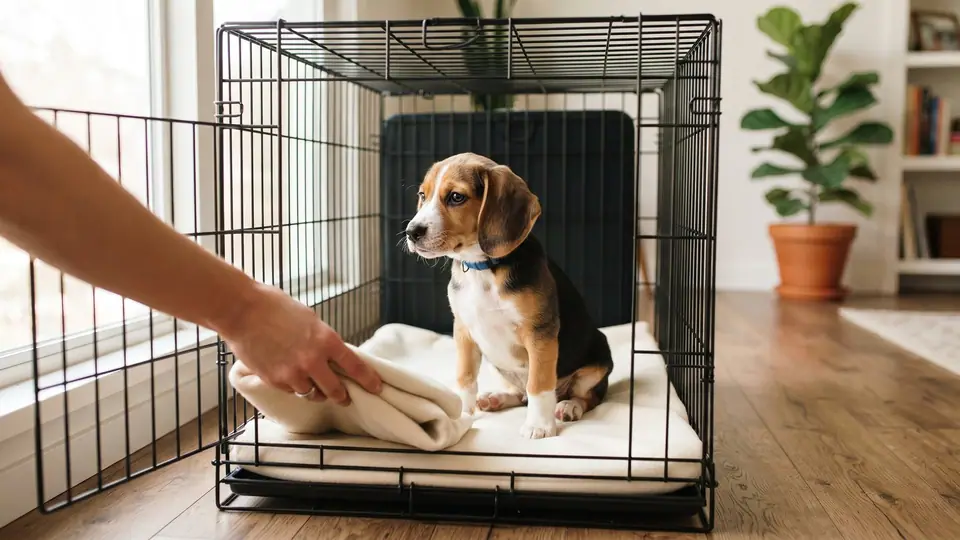
- Swap the bedding. Use a thin washable mat, a vet-bed type fleece or the bare tray for a week or two. Bring back the soft bed once the crate has stayed dry for several days in a row.
- Clean properly. Wash the tray, bars and anything fabric with an enzyme cleaner made for pet urine. Rinse, dry, then put the puppy back in. Bleach and ammonia cleaners leave a smell the puppy can still find.
- Rebuild short clean stays. Toilet trip first, then a short stay with a chew or a stuffed food toy inside. Open the door while the crate is still dry, take the puppy straight outside, and reward the pee in the garden or yard.
Keep the rest of potty training going at the same time: regular trips after sleep, play and meals, and a reward the moment the puppy finishes outside.
What about accidents at night?
Night accidents are often about timing. An 8 to 10 week puppy usually needs at least one trip in the night. Set an alarm a little before the time the accidents happen, carry or lead the puppy out quietly, wait for the pee, then straight back to bed with no play. The full method is on night toilet trips. Push the alarm later by 15 to 30 minutes every few dry nights.
Also check the last trip of the evening. A big drink and a play session right before bed make a wet crate more likely. Give the last big drink an hour or two before bedtime, and keep water available during the day.
What if the puppy poos in the crate?
Poo in the crate follows the same rules, with one extra: timing of meals. Most puppies need to poo within about 30 minutes of eating and soon after waking. Feed at set times, take the puppy out after each meal, and wait a few minutes longer than you think. A puppy that poos in the crate every morning may need the evening meal a little earlier.
Loose stools, poo with blood or mucus, or a puppy that strains often all need your vet.
When should you ask your vet?
Ask your vet if you see many small pees, straining, blood, a strong smell, much more drinking than usual, dribbling while asleep, or accidents after weeks of being clean. These can point to a health problem that no crate setup will fix. See when to call the vet for a fuller list.
What are the usual mistakes?
- Scolding the puppy for the mess. It teaches the puppy to hide when it needs to go, often behind the sofa.
- Rubbing the puppy’s nose in it. It frightens the puppy and teaches nothing about where to go.
- Leaving puppy pads in the crate. They tell the puppy that toileting inside the crate is fine.
- Buying the adult-size crate with no divider. The spare floor becomes the toilet.
- Long stays because the puppy is quiet. Quiet does not mean the bladder can wait.
- Cleaning with ammonia or only water. The smell stays and the puppy goes back to the spot.
Pair this page with puppy crate size for the setup, how long a puppy can stay in a crate for the timings, and potty training for the outdoor side. More on the puppy hub.
Questions on this page
Why is my puppy peeing in the crate all of a sudden?
Look at what changed: a bigger crate or a removed divider, longer stretches inside, new soft bedding, a move to a new room, or more time alone. If nothing changed and the puppy also pees more often, strains or drinks much more, ask your vet.
Will a puppy pee where it sleeps?
Most puppies try hard to keep their sleeping spot clean, but the habit has limits. If the crate is big enough to toilet at one end and sleep at the other, or the puppy is shut in longer than its bladder can manage, it will go in there.
Should I take the bedding out of the crate?
If the puppy pees on soft bedding and then sleeps on the dry side, swap to a thin washable mat or a bare tray for a week or two. Add the soft bed back once the crate has stayed clean for several days in a row.
How do I clean pee out of a dog crate?
Take the tray out, wash it and the bars with an enzyme cleaner made for pet urine, rinse, and let it dry fully before the puppy goes back in. Ammonia-based cleaners smell like urine to a dog and can draw the puppy back to the same spot.
When is peeing in the crate a reason to ask the vet?
Ask your vet if the puppy has many small pees, strains, has blood in the urine, drinks a lot more than usual, dribbles while asleep, or starts having accidents after weeks of being clean. Those are health questions, and a trainer cannot answer them.
Work with me
A $150 consultation or $500 monthly curatorship. Opens WhatsApp to Andrew.