Expert Advice · Puppy · 8 min read
Puppy growling: play growl or warning growl?
Most puppies growl in play, and a play growl comes with a loose, bouncy body. A warning growl comes with a still, stiff body, often over food, toys, a resting spot or handling. Here is how to tell them apart, what to do in the moment, and when to bring in your vet and a qualified trainer early.
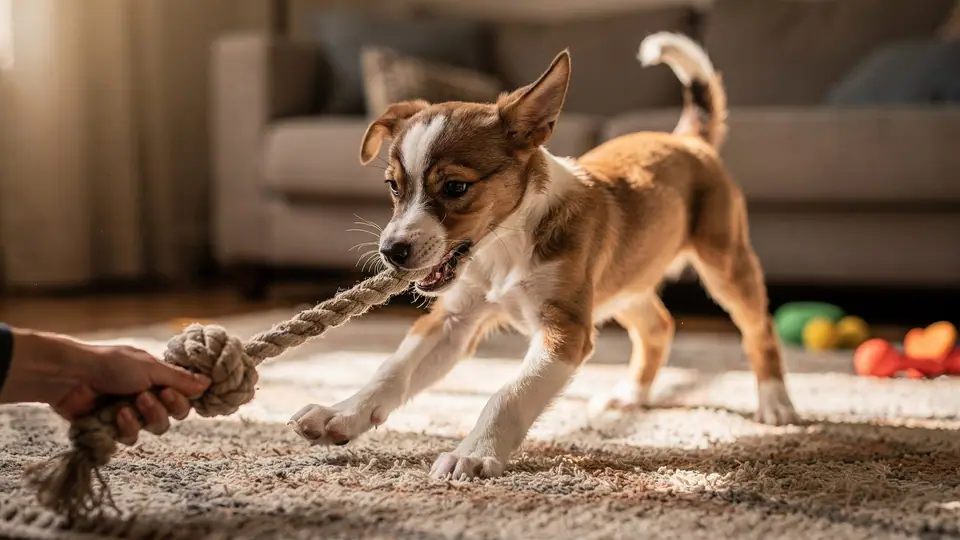
Puppy growling is usually play: a loose, bouncy puppy growling over tug or a chase game is normal. A growl from a puppy that goes still and stiff, often over food, a chew, a resting spot or being handled, is a warning, and it deserves respect and early help. Never punish the growl; change the setup instead. If the warning growls happen over food, toys or a person, the full plan lives on resource guarding in dogs.
I am Andrew Darov, a dog trainer. I am not a veterinarian. This is a puppy page about reading growls and keeping your home safe. It does not replace a vet check or in-person help.
Is puppy growling normal?
A growl is a sound. The body tells you whether it means “this is fun” or “back off”.
Most puppies growl. They growl at a tug toy, at a littermate, at a sock they are shaking, and sometimes at their own tail. That is normal play, and it is often loud. A loud growl in play does not mean the puppy is aggressive.
Puppies also use a growl the way adult dogs do: to say “I am not comfortable”. That growl is useful. It comes before a snap, and it gives you time to step back. You want to keep it.
How do you tell a play growl from a warning growl?
Watch the whole puppy for two or three seconds.
Play growl:
- loose, wiggly, curvy body
- play bows, bouncing, rolling over
- soft face, mouth often open
- breaks in the game, then the puppy comes back for more
- happens in tug, chase or wrestling with a person or another dog it knows
Warning growl:
- the puppy goes still or freezes
- body low and stiff, or leaning over an item
- mouth closed, lips pushed forward or lifted a little
- hard stare, or the whites of the eyes showing
- eating gets faster when you come close
- happens over food, a chew, a toy, a bed, a sofa spot, or when the puppy is picked up, held or touched
If you are not sure, treat it as a warning. Stepping back from play costs you nothing.
What should you do in the moment?
- Read the body first. Loose and bouncy means play. Still, stiff, hard eyes or a freeze means a warning. Decide before you reach for the puppy.
- Pause play growling that gets louder. If tug or wrestling gets wilder, the growls get higher and the teeth start landing on hands or sleeves, stop for a few seconds. Let go of the toy, stand still, wait for the puppy to calm a little, then restart softer or end with a chew. Puppy biting and nipping covers the hands-and-sleeves part.
- Give space to a warning growl. Step back. Keep your voice calm. Do not grab the item, the collar or the puppy. If you need the item back, toss a few treats on the floor a little way off and pick the item up while the puppy eats.
- Write down what caused it. What did the puppy have? Where was it? Who came close, and how? Was it tired, or just woken up? Then change the setup: feed in a pen or behind a gate, give chews where nobody walks past, and keep the puppy off the sofa if it growls there.
- Get help early. Ask your vet about pain, then work with a qualified trainer in person if the warning growls keep coming, get stronger, or come with a snap.
Why do puppies growl over food and toys?
Keeping hold of good things is normal dog behavior. Some puppies learn early that hands near the bowl mean the food goes away, so they start to guard it. Taking the bowl away “to show who is boss” often makes this worse, because it proves the puppy right.
What helps at home:
- Feed the puppy in a pen, crate or behind a gate, with nobody walking past.
- Let the puppy finish chews in peace. Swap for a treat when you need something back.
- Walk past the bowl at a distance and drop a tasty bit of food in, then walk on. The puppy learns that people near the bowl add food.
- Keep children away from a puppy that is eating or chewing.
If the puppy freezes, stares or growls over food, toys or a person and it is getting stronger, read resource guarding and get help early. It is much easier to change at 12 weeks than at 12 months.
Can growling mean your puppy is in pain?
Yes. Puppies that growl when picked up, when one paw or ear is touched, or when moved off a bed may be sore. Signs that point toward a vet visit:
- the growling started suddenly
- it happens with one body part or one kind of lift
- your puppy also yelps, limps, eats less or sleeps more than usual
Ask your vet. See when to call the vet for the signs that should not wait. Once your vet is happy, short, gentle handling practice with food helps; the puppy handling page shows the steps.
What about growling with other dogs?
Puppies growl a lot in play with other dogs, and that is fine if both dogs take turns, both keep coming back and there are short breaks. Watch for one dog always on top, one dog trying to leave, or play that gets faster and louder without breaks. Then call your puppy out for a short rest. An older dog that growls at a pushy puppy is often just teaching manners; the puppy and adult dog play rules page shows when that is fine and when to step in.
When should you get help early?
Bring in your vet and a qualified trainer early if:
- the puppy freezes, stares or growls over food, chews, toys or a resting spot, and it is getting stronger
- the puppy has snapped or bitten, even once, outside of play
- the puppy growls at children
- the puppy growls when picked up, handled or groomed
- growling started suddenly
Until then, keep children away from the puppy when it eats, chews or rests, and use gates so nobody has to reach in. The dog growling at a child page covers homes with kids.
What are the usual mistakes?
- Telling the puppy off for growling. You lose the warning and may get a snap next time.
- Taking the bowl away to test the puppy. It teaches the puppy that hands near food are bad news.
- Letting tug get wilder and wilder. Short games with breaks keep play growls as play.
- Calling every growl aggression. Most play growls are normal. Watch the body.
- Waiting to see if it grows out of it. Warning growls over food or handling usually get stronger without help.
A growling puppy is usually a playing puppy. When the body goes still and stiff, the growl is a warning: give space, change the setup and get help early. Next steps: resource guarding for food and toy guarding, puppy handling for gentle touch practice, and puppy biting and nipping for rough play. More on the puppy hub.
Questions on this page
Is it normal for a puppy to growl?
Yes. Many puppies growl during tug, chase and wrestling games, and it is part of normal play. A play growl comes with a loose, wiggly body, play bows, bouncing and breaks in the game. A growl from a still, stiff puppy is different: that is a warning that something is too much.
How can I tell a play growl from a warning growl?
Look at the body, not the sound. Play: loose and curvy, soft face, the puppy comes back for more. Warning: the puppy goes still or freezes, the mouth closes, the eyes go hard or show the whites, and it often happens over food, a chew, a resting spot or being handled.
Should I tell my puppy off for growling?
No. A warning growl is information. If you punish it, the puppy may learn to skip the warning and go straight to a snap. Calmly end the moment, make a note of what caused it, and change the setup so it happens less.
Can a puppy growl because it is in pain?
Yes. A puppy that growls when picked up, touched in one place or moved from a bed may be sore. A growl that starts suddenly, or comes with limping, yelping or a change in eating, is a reason to ask your vet.
When should I get help for a growling puppy?
Early. Get help if the puppy growls over food, chews or toys and the growl is getting stronger, if it has snapped or bitten, if it growls at children, or if it growls when handled. Book your vet first, then a qualified trainer working with you in person.
Work with me
A $150 consultation or $500 monthly curatorship. Opens WhatsApp to Andrew.