
Expert Advice · Puppy · 7 min read
Puppy follows me everywhere: is it normal and what to do
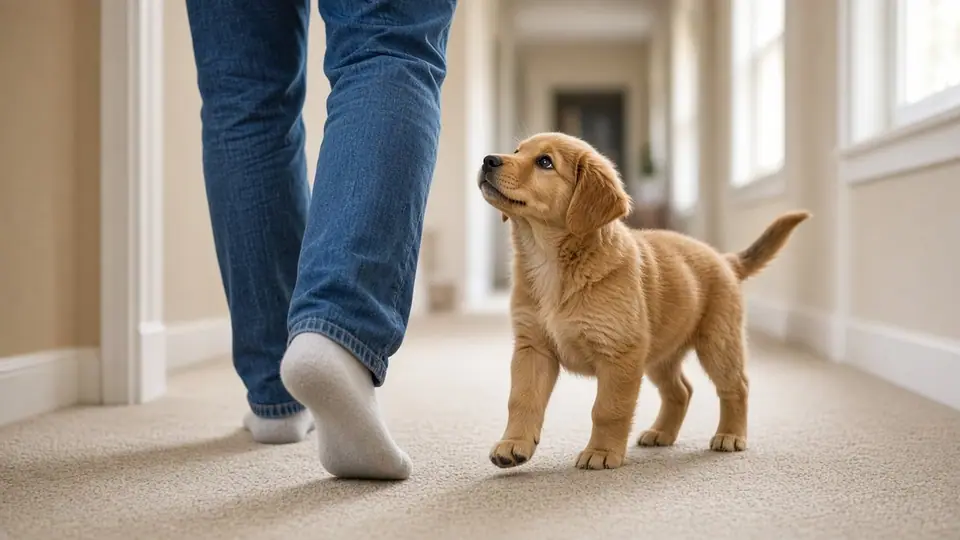
Most puppies follow their people from room to room in the first weeks. That is normal. The goal is a puppy that can also rest calmly on the other side of a gate, built with tiny practice steps and rewards for quiet.
A puppy that follows you everywhere is usually normal: young puppies stay close to the people who keep them safe, and the first weeks in a new home make it stronger. You do not need to stop it. Add short daily practice behind a baby gate, with a chew and rewards for calm, so your puppy learns that time on its own is safe. For the next step, leaving the house, read first absences, which covers short trips out.
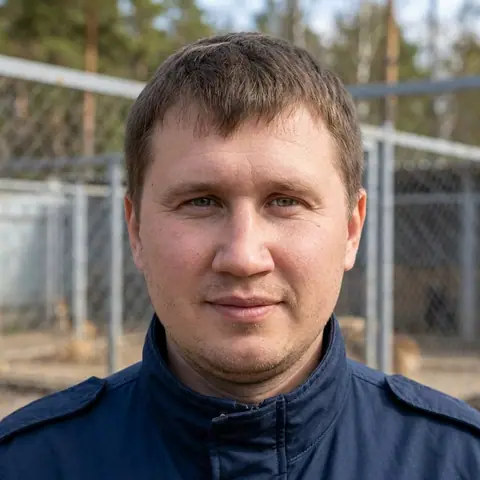
I am Andrew Darov, a dog trainer. I am not a veterinarian. This is a puppy page about shadowing inside the home.
Why does my puppy follow me everywhere?
Following you is how a young puppy stays safe and finds out where the good things happen. It is a habit to shape, not a fault to fix.
There are a few common reasons:
- Safety. A puppy has just left its mother and littermates. You are now the familiar thing in a strange place.
- Good things come from you. Food, play, walks and attention all start where you are, so following pays off.
- Nothing else to do. A puppy that is awake, bored and a bit overtired often trails after you instead of settling.
- Habit. If every move you make leads somewhere interesting, the puppy learns to get up every time you do.
None of this means the puppy is “too attached”. It means it has not yet learned that resting alone also works out well.
When is shadowing normal and when is it a worry?
It is normal when your puppy follows you around, but can settle with a chew in the same room, falls asleep in its crate or pen, and gets over a short separation within a minute or two.
It is worth getting help early when your puppy screams, scratches at doors or has accidents every time you step out of sight, even for seconds, or when it cannot fall asleep unless it is touching you. If following starts suddenly in a puppy that used to settle, or comes with other changes such as eating less, ask your vet. Our when to call the vet page lists the signs to take seriously.
How do I teach my puppy to rest on the other side of a gate?
A baby gate is the easiest tool, because your puppy can still see and hear you. A playpen works too.
- Set up a gate and a resting spot. Put the gate across a doorway, with a bed or mat and a safe chew on the puppy’s side.
- Step away for a few seconds. Give the chew, step over to the other side, and come back after three to five seconds while the puppy is still busy or calm.
- Reward calm, not noise. Drop a treat on the mat when the puppy is quiet. If it whines, wait for one quiet breath before you return.
- Build time slowly. Add a few seconds at a time over several days. Once the puppy stays relaxed, step briefly out of sight, then come straight back.
- Mix it into the day. Do several short rounds a day, best after play and a toilet trip, when the puppy is ready for a nap anyway.
Keep it boring. Leave without a big goodbye and come back without a big hello. The calm return is part of the lesson.
What else helps a clingy puppy?
- Enough sleep. Puppies need a lot of it. An overtired puppy clings more and settles less. Short planned naps in a crate or pen make the whole day calmer.
- Things to do alone. A safe chew, a lick mat or a few treats scattered on a mat give the puppy a reason to stay put.
- Let it follow sometimes. You do not need to gate the puppy every time you get up. A mix of “you can come” and “you stay here” is fine.
- Calm, not cold. Do not push the puppy away or tell it off for following. That makes your movements more worrying, not less.
How long until my puppy settles on its own?
It varies from puppy to puppy. Many puppies can rest behind a gate for several minutes within a week or two of short daily practice, and for longer stretches over the following weeks. Puppies that came from a busy litter, were rehomed more than once, or are naturally more cautious may need smaller steps for longer.
Watch the puppy, not the clock. Signs you can add time: the puppy lies down soon after you step away, chews or sleeps instead of watching the gate, and greets you calmly when you return. Signs to go back a step: whining that grows, scratching at the gate, or the chew left untouched. A step back is normal and usually only lasts a day or two.
What are the usual mistakes?
- Big jumps in time. Going from ten seconds to ten minutes in one day. Small steps keep the puppy relaxed.
- Coming back on crying. Return in a quiet moment, even a short one, so quiet is what brings you back.
- Practising only when you must leave. If the gate only goes up before you go out, the gate itself becomes a warning sign.
- Too little sleep. A tired puppy cannot settle, however good the plan.
- Waiting too long for help. Real panic at short separations gets harder to change the longer it goes on.
A puppy that follows you is a puppy that likes you. Teach it that resting alone is safe too, a few seconds at a time. Next steps: first absences for leaving the house, baby gates for setting up the home, and playpen or crate for choosing a resting space. More on the puppy hub.
Questions on this page
Is it normal for a puppy to follow you everywhere?
Yes. Young puppies stay close to the people who feed and protect them, especially in the first weeks in a new home. It becomes a problem only if the puppy cannot settle at all when you step away.
Will my puppy grow out of following me?
Many puppies follow less as they grow in confidence, but it goes faster if you teach calm time behind a gate from the start. Without practice, some dogs keep shadowing into adulthood.
Should I stop my puppy from following me?
You do not need to stop it every time. Let the puppy follow when it suits you, and add a few short moments each day where the puppy stays behind a gate with a chew while you move around.
How do I teach my puppy to stay in another room?
Start with a gate and a chew, step away for a few seconds, come back while the puppy is still calm, and reward. Build up the time slowly over days, and come back before the puppy starts to cry.
When is following a sign of a bigger problem?
If your puppy panics, howls, chews doors or has accidents whenever you are out of sight, even for a moment, get help from a trainer early. If the change is sudden, ask your vet to rule out a health cause.
Work with me
A $150 consultation or $500 monthly curatorship. Opens WhatsApp to Andrew.