
Expert Advice · Puppy · 7 min read
Puppy zoomies: why they happen and what to do
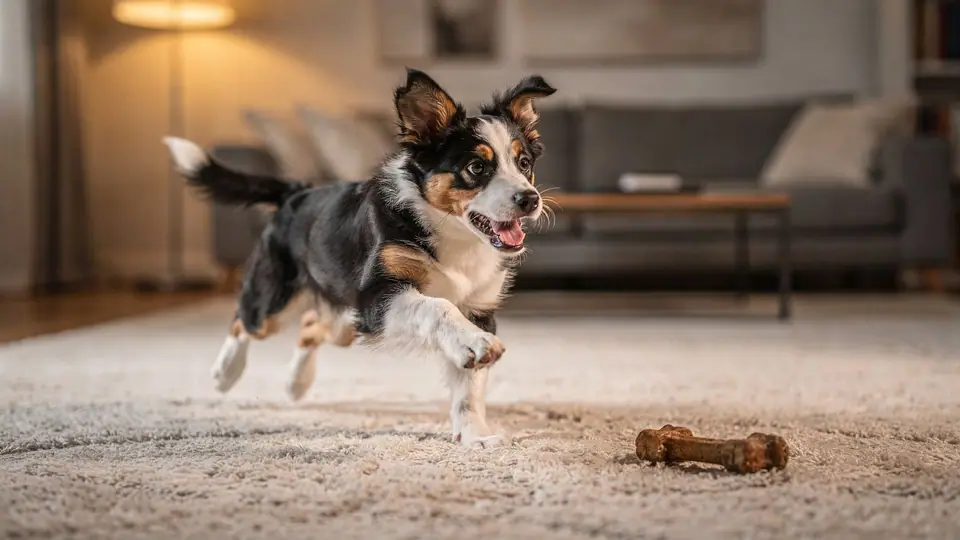
Zoomies are short, wild laps of running that most puppies do every day. They are usually normal play and pass in a minute or two. Your job is a safe space, a calm wait, and a quiet way out when the zoomies tip into nipping, which usually means the puppy needs sleep.
Puppy zoomies are short bursts of fast, happy running, and in most puppies they are normal play. Make the space safe, let the burst run out, and step in calmly only if it turns into biting or crashing into things. If your zoomies always arrive between 6 and 9 pm with sharp teeth, that is the evening slump covered on puppy witching hour; this page is about the zoomies themselves at any time of day.
I am Andrew Darov, a dog trainer. I am not a veterinarian. This is a puppy page about everyday behavior and safety at home.
What are puppy zoomies?
Zoomies are sudden laps of running, spinning and play bows that last seconds to a couple of minutes and then stop on their own.
You will see a puppy that tucks its rear end down, runs in circles or figures of eight, bounces off the sofa, skids on the floor and then flops down as if nothing happened. Many people call it a “frenetic random activity period”, but zoomies is the common name.
Typical times are:
- right after a bath or towel drying;
- after a poo, especially outside;
- after a long nap or after being let out of a crate or pen;
- after dinner;
- in the evening, when the day has been long.
Adult dogs do it too, usually less often. A young dog with a loose body, a relaxed open mouth and play bows is having fun. That is the picture you want to see.
Why do puppies get the zoomies?
Nobody can see inside a puppy’s head, so treat any single explanation with care. What trainers and owners see over and over is that zoomies come when a puppy has energy to burn after being still, or when a lot has happened and the puppy is excited. A bath, a new place, visitors, a long time in the crate or a busy afternoon can all lead to a burst.
The other common pattern is tiredness. A puppy that has missed a nap can look “more awake”, not less. The running gets wilder, the teeth come out, and the puppy finds it hard to stop. If that sounds like your evenings, read enforced naps and overtired vs overstimulated.
How do you handle zoomies, step by step?
- Make the space safe. Pick the room where zoomies usually happen. Move breakables and cables, close the stair gate, and put a rug or runner on slippery wooden or tiled floors so the puppy can turn without sliding into a wall. Keep small children out of the running path for that minute.
- Stay still and quiet. Do not chase the puppy, shout its name over and over or try to grab its collar. Chasing turns zoomies into a game of “catch me” that grows longer each week. Stand or sit still and let the puppy run around you.
- Let the burst run out. Most zoomies end within one or two minutes. When the puppy slows down, call it in a normal voice and reward it with a piece of food, or scatter a few pieces on the floor to sniff out. Sniffing helps a puppy come down from fast running.
- Step in if biting starts. If the puppy starts biting ankles, hands, trousers or another pet, stop the game calmly. Walk the puppy to its pen or crate with a chew or a stuffed food toy, then leave it to settle in a quiet room. This is not a punishment, it is a break. More on teeth in puppy biting and nipping.
- Plan the next nap. Write down when the zoomies happen for three or four days. If they cluster at the same time, add a nap or calm chew time about 30 minutes before that point. Planned rest is the easiest way to make bitey zoomies shorter.
Where should a puppy have the zoomies?
The best place is somewhere with grip under the paws and nothing hard at head height: a carpeted room, a lawn in a fenced yard or garden, or a hallway with a long runner. Wooden floors and tiles are the most common place for slips and knocks.
Outside, zoomies on a leash or lead can pull you over or tangle the puppy. If your puppy often bursts into running after a poo on a walk, stand still, keep the lead short but loose and let the puppy bounce in place for a few seconds. In a safe fenced area you can drop a long line and let it run. Never let a puppy zoom near a road, water or stairs.
If you have an older dog at home, zoomies can turn into rough chasing that the adult dog does not want. Step in and give each dog its own space for a few minutes. The rules for mixed play are on puppy and adult dog play rules.
When are zoomies a sign of a problem?
Most are fine. Keep an eye on a few things:
- Zoomies that end in hard biting every time. This usually means the puppy is overtired or there is too much going on. Look at sleep first.
- Zoomies many times an hour, every day. The puppy may need more sleep, more sniffing and chewing time and less wild play.
- Running that looks uncomfortable. Scooting the rear, chasing or biting the tail or rear end, crying, or limping afterwards are things to ask your vet about. See when to call the vet.
What are the usual mistakes?
- Chasing the puppy. It turns a short burst into a long game of keep-away.
- Shouting or grabbing the collar. It adds more excitement and can make the puppy wary of hands.
- Slippery floors. Put rugs down where zoomies happen most.
- More exercise to “tire the puppy out”. Long walks often lead to more zoomies, not fewer. Rest and sniffing help more.
- Ignoring the time of day. Same time every day usually means a missing nap.
Zoomies are a normal, happy part of puppyhood: clear the space, keep still, let it run out, and add rest when the running turns into biting. For evening slumps see puppy witching hour, for daytime rest enforced naps, and for play with an older dog puppy and adult dog play rules. More on the puppy hub.
Questions on this page
Are puppy zoomies normal?
Yes. Short bursts of fast, happy running are very common in puppies and young dogs. They often come after a bath, a poo, a meal, a long nap or in the evening. A burst usually lasts from a few seconds to a couple of minutes and ends on its own.
Should I stop my puppy's zoomies?
Usually no. Make the space safe and let the burst run out. Step in only if the puppy is about to hit furniture, stairs or slippery floors, or if the running turns into biting hands, clothes or another pet.
Why does my puppy bite during zoomies?
Zoomies that end in hard biting are often a sign the puppy is overtired or has had too much going on. Stop the game, give a chew in a quiet pen or crate, and look at the nap schedule for that time of day.
Why does my puppy get zoomies at night?
Evening zoomies are common because many puppies miss a nap in the late afternoon and are tired by early evening. A planned early-evening nap and a calm last hour before bed usually make them shorter.
When should I ask my vet about zoomies?
Ask your vet if the running looks like the puppy is in discomfort, for example scooting, chasing or biting its tail or rear, crying, or if the dog limps afterwards. Normal zoomies look loose and happy.
Work with me
A $150 consultation or $500 monthly curatorship. Opens WhatsApp to Andrew.