
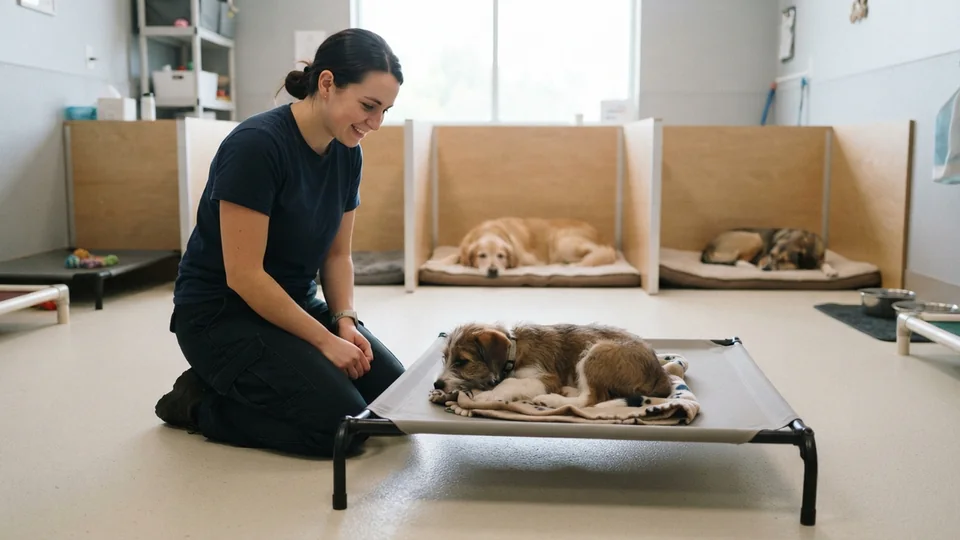
Expert Advice · Puppy · 7 min read
Puppy Daycare vs Home Alone: How to Choose
For a young puppy, the real choice is not daycare or nothing. It is which kind of company and toilet breaks fit your puppy, your job and your budget.

Short answer
Young puppies should not spend a full workday alone, so plan cover rather than choose between daycare and nothing. Daycare can suit a confident, vaccinated puppy who enjoys other dogs; a dog walker, sitter or family visit often suits younger or shyer puppies better. Whatever you choose, build short alone-time practice at home and keep each alone stretch within what your puppy can cope with.
Working from home instead? The work from home puppy schedule puts naps under your meetings and keeps short alone practice in the day.
The real choice: what kind of cover
A young puppy needs frequent toilet breaks, regular naps, meals at steady times and company. RSPCA advises leaving dogs for no longer than four hours so they have chances to exercise, go to the toilet and spend time with people, and recommends introducing time alone gradually. For a puppy, the sensible question is therefore not “daycare or alone?” but “who covers the middle of the day, and how?”
This page compares the options. The workday timetable lives on puppy and a full-time job, crate use on workdays on crate training while at work, and the skill of being left on first absences.
Options compared
| Option | Best for | Watch out for |
|---|---|---|
| Daycare | Confident, vaccinated puppies who enjoy other dogs; long workdays | Over-tiredness, noise, too little rest; vaccination rules; cost |
| Dog walker or pet visitor | Younger or shyer puppies; a midday toilet break and short play | Visits must fit the puppy's toilet timing; check training and insurance |
| Sitter at home or family help | Very young puppies; puppies who struggle alone | Consistency: everyone needs to follow the same routine |
| Puppy-safe pen at home with a midday visit | Puppies who already rest calmly alone for short periods | Alone stretches must stay within what the puppy can cope with |
| Taking the puppy to work or working from home | Calm workplaces that allow dogs; hybrid jobs | A busy office can be overwhelming; puppies still need naps |
| Long hours alone or in a crate | Not suitable for a young puppy | Toilet accidents, distress, crate becoming unpleasant |
Decide by age and temperament
| Puppy | Usually works | Why |
|---|---|---|
| 8–12 weeks, settling in | Someone at home, a sitter or frequent visits | Toilet needs every hour or two while awake; first alone-time practice is in minutes |
| 12–16 weeks | Visits or a sitter; daycare only once your vet and the daycare agree | Vaccinations may still be in progress; puppies tire quickly in groups |
| 4–6 months, confident with dogs | Daycare some days, walker or home on others | More stamina, still needs rest and short alone spells |
| Any age, shy or easily worried | Walker, sitter or family; small, calm meetings with other dogs | A busy group can be overwhelming |
| Any age, distressed when left | Avoid being left alone while you get help | Dogs Trust advises not leaving a dog for longer than they can cope with |
Vaccination timing varies between puppies and countries. AKC's vaccination guide notes that daycares and group classes will often ask for proof of vaccination. Ask your vet when your puppy can safely mix with other dogs, and ask the daycare what it requires.
How to choose a daycare
AKC recommends visiting without your dog first and watching how staff handle the dogs. RSPCA describes what licensed daycares in the UK must provide. Look for these points:
- An assessment first. RSPCA says a licensed daycare should assess dogs before they attend, to check they are not scared, anxious or stressed around other dogs and people.
- Rest and retreat. A designated rest area and a safe space where dogs can avoid people or other dogs if they choose. Ask how naps work for puppies.
- Toilet access whenever the dog needs it.
- Sensible grouping and supervision. Ask how dogs are grouped by size, age and play style, and how many staff watch each group.
- Trained staff who understand dog body language and canine first aid, and an emergency plan.
- Clear communication. How they will tell you about changes in behaviour or wellbeing, and whether and for how long dogs are crated.
- Reward-based handling. AVSAB recommends humane, reward-based methods; ask how staff interrupt rough play.
The best sign is a puppy who comes home tired but relaxed, not frazzled.
How to choose a dog walker or visitor
Dogs Trust recommends checking a walker's training in dog behaviour and handling, canine first aid, third-party liability insurance, references and any local licensing rules, and agreeing a written plan. For a young puppy, ask for a home visit rather than a group walk: a toilet trip, a short play or sniff in the garden, fresh water and a calm settle before they leave.
Practise alone time either way
Even with daycare or a walker, your puppy needs to learn that short periods alone are safe. Dogs Trust suggests starting with a few minutes and building slowly, only while the puppy is relaxed. RSPCA describes a similar step-by-step approach and recommends occasionally filming your dog to check for hidden signs of distress such as trembling, pacing or whining.
- Start while your puppy rests in a pen or crate with a chew and you are in the room.
- Step out for seconds, then minutes, returning calmly before they get upset.
- Offer a toilet trip and some activity before you leave.
- Keep leaving and returning low-key.
The full ladder is on first absences and puppy alone-time steps.
A sample mixed week
| Day | Cover | Evening |
|---|---|---|
| Monday | Walker visit at midday; pen at home | Short training, calm play, early rest |
| Tuesday | Daycare (if your puppy is ready) | Quiet evening; puppies are often very tired after daycare |
| Wednesday | Working from home, short alone practice | Normal routine |
| Thursday | Family member or sitter | Normal routine |
| Friday | Walker visit at midday | Sniff walk, then rest |
This is an example, not a prescription. Adjust it to your puppy's age, energy and how they cope.
Signs the arrangement is not working
- Coming home frantic or unable to settle after daycare, rather than tired and relaxed.
- Reluctance to go in at drop-off, or hiding.
- Accidents at home that suggest alone stretches are too long.
- Howling, chewing exits or scratching doors when left. This needs a shorter plan and possibly qualified help.
- New fear or grumpiness with other dogs.
If you see these, change the plan: shorter days, a different provider, or more home-based cover. If your puppy panics when alone, talk to your vet or a qualified behaviourist.
Sources and scope
- AKC — How to Choose a Daycare for Your Dog
- RSPCA — Choosing a dog boarding kennel or daycare
- RSPCA — How to train your dog to stay home alone
- Dogs Trust — How to find a good dog walker
- Dogs Trust — Separation anxiety in dogs
- AKC — Puppy Vaccination Schedule
- AVSAB — Position statements, including puppy socialisation
Public welfare and veterinary guidance informs the safety context. Tables, sample days and step lists are editorial planning aids, not research findings, diagnostic tools or a substitute for individual veterinary advice. Sources checked 14 November 2026.
Questions on this page
What age can a puppy go to daycare?
It depends on your puppy’s vaccinations and on each daycare’s rules. AKC notes that daycare services will often ask for proof of vaccination. Ask your vet when your puppy will be protected, and ask the daycare what it requires before booking.
Is daycare better than leaving a puppy alone?
For a confident puppy who enjoys other dogs, daycare can be better than long hours alone. For a shy or easily overwhelmed puppy, a walker, sitter or family visit at home is often kinder. Long stretches alone are not suitable for young puppies either way.
How long can a puppy be left alone?
Much less than an adult dog, and only after gradual practice. RSPCA advises leaving dogs for no longer than four hours; young puppies also need regular toilet breaks and company. See how long a dog can be left alone and the crate duration guide.
How many days a week should a puppy go to daycare?
There is no fixed number. Many puppies come home very tired from a full day, so some owners mix daycare days with walker or home days. Watch whether your puppy seems relaxed or stressed at the end of the day, as AKC suggests.
What should a good daycare do?
Assess your puppy before accepting them, group dogs carefully, provide rest areas and toilet access, have trained staff and an emergency plan, and tell you about changes in your dog. RSPCA describes these standards for licensed daycares in the UK.
Can daycare cause or fix separation anxiety?
Daycare can reduce the hours a puppy spends alone, but it does not teach a puppy to cope alone at home. Build short absences gradually. If your puppy panics when left, get help from your vet or a qualified behaviourist. See puppy alone-time steps.
Work with me
A $150 consultation or $500 monthly curatorship. Opens WhatsApp to Andrew.