
Expert Advice · Puppy · 14 min read
Crate training schedule for 8 week old puppy
A week-one crate clock for an eight-week-old: naps, short closed-door rests, and nights — not a full-day cell and not a second day-schedule clone.

A crate training schedule for an 8 week old puppy is a week-one clock for the box: when it closes, how long, and where it sits at night. It is not a full day diary and not a workday babysitter. The loop of toilet, short wake, and rest still lives on the puppy day schedule. Safe length ceilings live on how long in a crate. Open-door introduction lives on crate training. Stay here for the crate timetable only.
I am Andrew Darov, a trainer from Russia. I am not a veterinarian. These are working household numbers from residential training floors, not a promise every puppy matches the midpoint.
What does week one at 8 weeks look like in the crate?
Empty, short closed-door nap, toilet again. Repeat. Night is a different clock beside the bed — not an ignore-all plan.
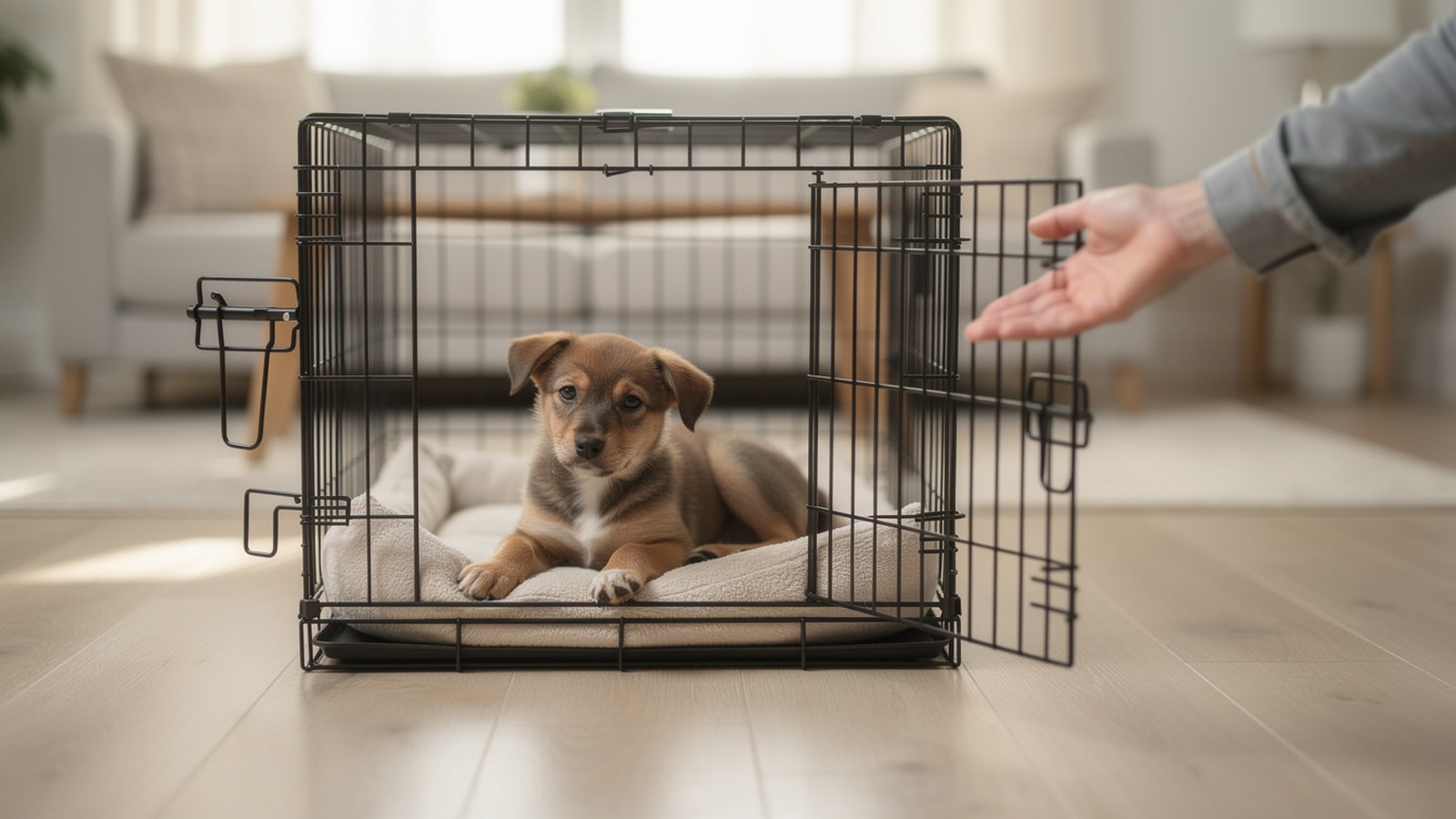
Day. After each toilet trip and a short wake (food, a little play, or a calm sit beside you), the puppy goes into a crate you have already introduced for a nap of about 30–60 minutes. You stay in the room at first. Then you step out for seconds, then minutes. Evening. The witching hour is usually a missed nap. Put the puppy down on purpose — see enforced naps and the nap clock for wake windows. Night. Crate beside the bed. Toilet trips stay boring. Classify sounds with the crate night classifier; the nights 1–7 setup lives on crate training at night.
US houses with a spare room and UK flats with one bedroom use the same rule: early nights need your ears. Architecture is not a longer closed-door stretch.
A sample day shape (adjust to your wake times): wake → toilet → short wake → nap → toilet → short wake → nap → … → early evening nap → last toilet → lights out beside the bed. The sample is a rhythm, not a stopwatch religion.
How do you raise closed-door time without poisoning the box?
- Confirm the puppy can settle with the door open and take food or a safe chew in the crate — steps on crate training.
- Close for a nap you can finish while you are home. Start under the ceiling on crate duration.
- Open on quiet feet when you can (see crate calm release), then toilet, then a short wake — not a hallway festival.
- Add brief absences in the same room only after several clean naps. One variable at a time: door closed, or you leave the room — not both plus guests.
- Overnight holds longer than daytime play stretches because the puppy is asleep. That still does not make night one a blanket ignore plan.
The schedule fails when owners treat the upper band as a dare, or when they close the door on a puppy who has never learned that the box is a rest place.
How does this crate clock sit next to naps and the day loop?
The puppy day schedule owns the shape of the day: toilet, short wake, rest, repeat. Enforced naps own why an overtired mouth looks “naughty” and how to end a wake on purpose. The nap clock owns wake-window ceilings by age. This page only answers: when does the crate door close in week one, and what happens at night.
If you try to paste all four into one wall of text, you will miss the toilet commute or you will close the door on a puppy who has never learned that the box is a rest place. Keep the tabs separate. Cross-link. Do not clone.
Sizing and hardware. Measure the body and use a divider so the puppy cannot toilet at one end and sleep at the other — details on crate size. Wire versus plastic is a separate choice on wire vs plastic crate. A cover is a dimmer after the crate already works, not a shortcut for introduction — see crate cover. None of those pages replace a week-one timetable.
Workdays. If you must leave for a full shift in week one, the answer is coverage (sitter, neighbour, midday break), not eight hours in a closed crate. The full workday puppy schedule owns that coverage question. This clock assumes you can be home for the short nap cycle or you have swapped covers so someone else runs the same loop.
What are the usual failure modes?
- Cloning the day schedule. Loop shape lives there; crate clock lives here.
- Using the crate as a full workday. An eight-week-old needs a sitter, a midday break, or leave — not eight hours in a box.
- Skipping the toilet before close. Wet bedding, shorter rest, louder next wake.
- Crate still a fight. Fix introduction before you blame the timetable.
- Ignoring climbing panic. Thrashing is a stop. Open, reset, shrink.
- Distant crate on night one. You cannot classify what you cannot hear.
Keep this tab next to the day schedule, crate duration, and enforced naps. One owns the loop, one owns the ceiling, one owns sleep debt, one owns the week-one crate clock — that is how the sleep cluster stays useful instead of becoming four copies of the same paragraph. If the body looks wrong, ask your vet.
Questions on this page
What is a crate training schedule for an 8 week old puppy?
A week-one timetable for when the box is closed: after toilet and a short wake, for naps and overnight beside the bed. The daily loop shape lives on the puppy day schedule. How long is safe lives on crate duration. This page owns the crate clock only.
How long should an 8 week old stay in the crate during the day?
Treat time as a ceiling, not a target. After a toilet trip, aim for short naps of about 30 to 60 minutes while you are home. Stretch only when the puppy actually sleeps. An eight-hour work shift is not a crate plan for this age.
Where should the crate be at night in week one?
Beside your bed so you can hear toilet need versus brief fuss. Distant rooms turn every sound into a guess. Night sound decisions stay on the crate night classifier; nights 1–7 detail lives on crate training at night.
What do you do before every closed-door rest?
Toilet first on a lead or leash, then a calm walk into the crate with a safe chew if you use one. You do not close the door on a full bladder or a land-shark play session. Wake windows and nap starts sit on enforced naps and the nap clock.
When is this schedule the wrong project?
Panic thrashing, repeated soiling in a correctly sized box, diarrhoea, or a puppy who cannot rest even in a quiet setup. Open, reset, shrink the interval, and ask your vet if the body looks wrong. This page is not a clinic.
Work with me
A $150 consultation or $500 monthly curatorship. Opens WhatsApp to Andrew.