
Expert Advice · Puppy · 12 min read
Potty bells for puppies: teach a toilet ring
Bells are a cue to the door, not a magic bladder. Build the toilet first, then the ring.

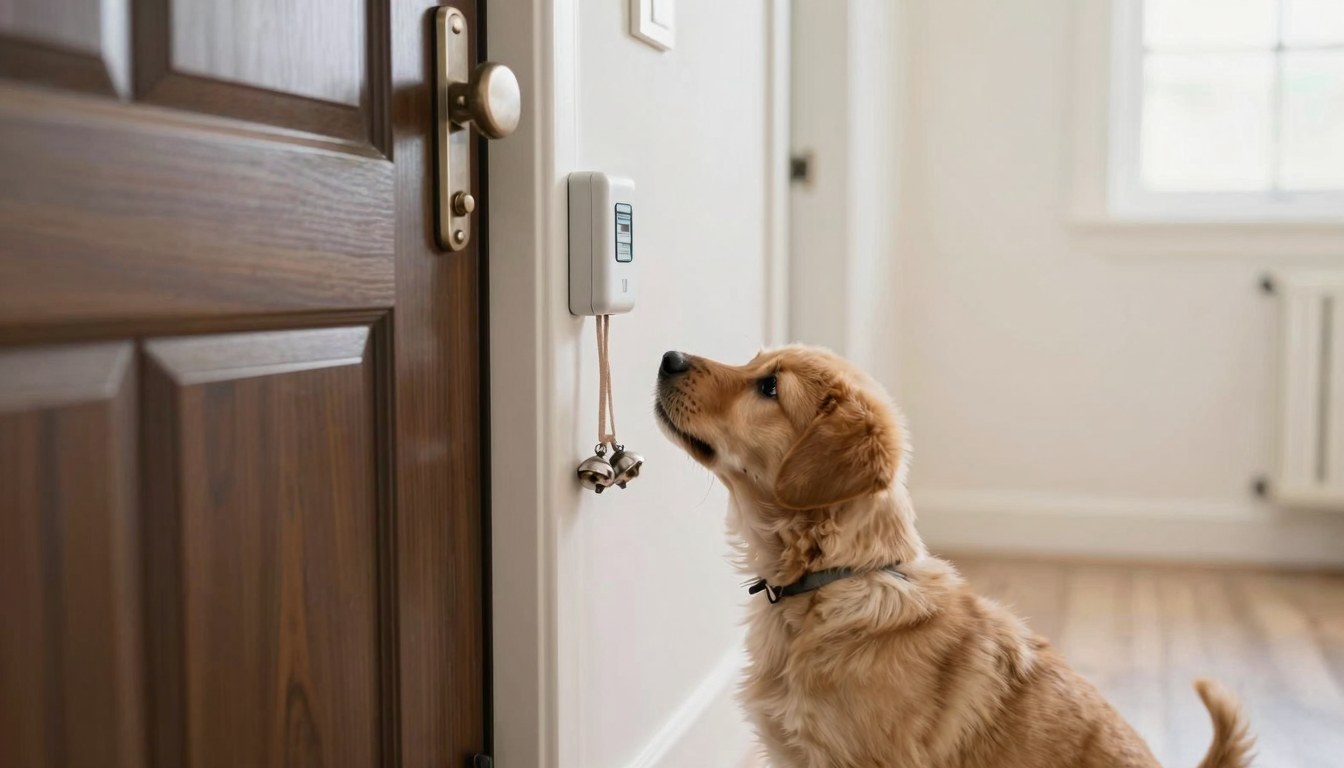
Potty bells are a toilet signal: the puppy noses or paws a hanging bell, you open the door, you go to the toilet surface. They do not empty a bladder. They do not replace a schedule. They sit on top of a pattern you already built on potty training.
This is a puppy page. The day map lives on puppy day schedule. Crate rest between toilet trips lives on crate training. This page owns the bells: when to add them, how to pair them, and how to stop a puppy who rings for fun. I work dogs in residential boarding for a month and longer. I am a professional trainer from Russia, not a veterinarian. See not veterinary advice.
What are potty bells?
A strip of bells, a button, or a hanging chime on the door that leads to the toilet place. The criterion is: puppy signals, adult takes puppy to the toilet surface now, elimination gets paid, empty trips come back inside without a festival.
They are optional. Many households succeed with a schedule and watching the sniff circles. Bells help when the adult is in another room and the puppy has a way to ask that is not a puddle.
US houses with a back door to a yard and UK flats with a pad or a lift to the street use the same learning. The surface changes. The ring still means toilet.
Bells ask for a toilet trip, not a walk party.
How do you teach potty bells?
After the toilet pattern exists. Not on night one in a new home.
- Hang one set at the puppy’s nose height on the door you actually use for toileting. Not five decorations around the flat.
- You ring first. On a trip you were already taking, touch the bells so they sound, then go straight out. Mark and pay the elimination on the named surface. The AKC potty-training overview is a public schedule-and-surface standard; this page adds the bell layer only.
- Guide a nose touch. Hold a tiny bit of food near the bells so the nose bumps them, click or say yes if you use a marker, then open and go. Pay outside for the toilet, not a jackpot at the bells.
- Wait for offered touches once guided bumps are cheap. Same rule: ring → toilet surface → pay elimination.
- Empty means boring return. If the puppy rings and does nothing outside, come back in. No sniff safari. That is how you stop spam.
Keep sessions short. Pair with trips you already planned from the day schedule. Do not stand at the door for twenty minutes hoping for a ring as the only plan.
Why does the puppy ring constantly?
Because ringing predicted outdoor fun, not only toileting.
Reset the contingency:
- bells → toilet place → if empty, back in
- walks and play use a different cue (lead on, “let’s go,” a harness routine)
- every adult runs the same rule, or the puppy waits for the soft adult
A US yard that is also the play garden and a UK street exit that is also the walk start are high-risk for this confuse. Separate the pictures. Toilet trip is short and boring after the pay. Adventure is another cue.
If the ringing is frantic and paired with distress when left alone, you may be looking at more than bells — see first absences and get qualified help if panic is the picture.
Can bells work in a flat?
Yes. The toilet surface may be:
- a balcony or utility pad you already named
- a litter or turf tray you committed to
- a fast trip down the stairs or lift to the kerb
The bell still means “take me to that surface now.” Do not hang bells on a door that leads to a stairwell you cannot supervise. Architecture differs. Unpaid accidents in the hall are still unpaid accidents. Build the potty training surface first.
When are bells a bad idea?
Use a fence you can see.
This protocol: puppy has a toilet pattern, can offer a nose touch, adults answer the ring with a toilet trip, spam is corrected by boring empty returns.
Not this protocol: no toilet pattern yet, medical soiling (blood, strain, sudden frequency), a puppy who rings and then pees at the door because nobody answers, or demand behaviour that is already aggression at the door. Medical questions are veterinary first. Door chaos with guests is barking at the door or wait at the door, not bells.
The American Veterinary Society of Animal Behavior reward-based framing still applies: you do not scare a puppy off the door and call it house training. Pay the toilet. Manage the rehearsal.
What usually fails?
- Bells before a toilet pattern. You taught a door toy. Fix potty training first.
- Paying the ring with a walk festival. Spam ringing. Empty trips return boring.
- Ignoring the ring. The puppy pees at the door. Answer or take the bells down.
- Five sets of bells. One door. One meaning.
- Night bells with no night toilet plan. Use the night and sleep pages for overnight needs.
- Treating medical soiling as a bell problem. Wrong ladder. Call a vet.
Add bells in a quiet week after the surface is named. Criteria only rise when the ring means toilet, not entertainment.
Sources
AKC potty-training overview. AVSAB position statements on humane training. Humane World public resources index. Paraphrased as public standards, not quoted as a substitute for the originals. akc.org — potty train a puppy · avsab.org/resources/position-statements/ · humaneworld.org/en/resources
Questions on this page
What are potty bells for a puppy?
A hanging bell or strip the puppy learns to nose or paw before you open the toilet door. They are a communication tool on top of a toilet schedule, not a replacement for management. If the puppy still pees in the hall, fix toileting first.
How do I teach a puppy to ring potty bells?
Hang bells at nose height. Pair ring with an immediate trip to the toilet surface. Mark and pay elimination outside, not the ring alone. Short sessions. Do not open the door for play rings. US yard and UK pad use the same learning rule.
Why does my puppy ring the bells constantly?
Because ringing paid with outdoor fun, not only with toileting. Reset: bells mean toilet trip, then back in if empty. Play and walks use a different cue. Intermittent outdoor parties keep the spam ringing alive.
Can I use potty bells in a flat without a garden?
Yes. The toilet surface may be a balcony pad, a litter tray you already chose, or a fast lift trip to the street. The bell still means “take me to the toilet place now.” Architecture changes. The criterion does not.
When are potty bells a bad idea?
When there is no toilet pattern yet, when ringing is already a demand bark with bells, when a puppy has a medical soiling problem, or when household adults ignore the ring. Fix potty training and health first. Bells are optional equipment.
Work with me
A $150 consultation or $500 monthly curatorship. Opens WhatsApp to Andrew.