
Expert Advice · Puppy · 8 min read
New puppy checklist: what to have ready before day one
Before your puppy comes home, set up one safe area, get the basic gear by type, book a vet check, and plan the first night and first week. You need far less than the shops suggest, and you can buy the rest once you know your puppy.

A new puppy checklist is short: one safe area with a crate or playpen and a baby gate, the basic gear by type (bowls, the same food, collar and ID tag, lead, harness, a few safe chews, cleaner), a puppy-proofed home, a booked vet check, and a plan for the first night and first week. Everything else can wait until you know your puppy. For the days after arrival, read the first week home, which covers what to do once the puppy is here.
I am Andrew Darov, a dog trainer. I am not a veterinarian. This is a puppy page about getting your home ready before day one.
What do you need before your puppy comes home?
You need a safe place to sleep, the basic gear, a home with nothing dangerous on the floor, and a plan, more than you need a pile of shopping.
The core list, by type:
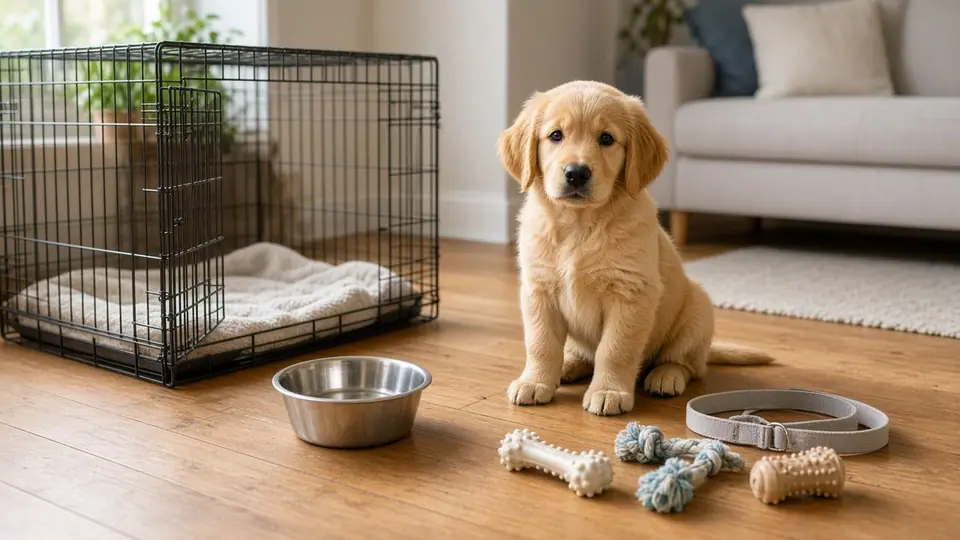
- A crate or playpen. For sleep and short rests. Check the right size on crate size.
- Soft, washable bedding. Two sets, so one can be in the wash.
- A baby gate or two. To close off rooms and stairs. See baby gates for where they help most.
- Food and water bowls. Heavy or non-tip bowls are easier for puppies.
- The same food the breeder or shelter used. Enough for the first two weeks.
- A flat collar with an ID tag. Follow your local rules on tags and microchips.
- A light lead and a harness. The harness should fit now, not “to grow into”. Use the harness fit check.
- A few safe chews and toys. Two or three chews, one soft toy, one tug toy.
- Enzyme cleaner and kitchen roll. Accidents will happen; enzyme cleaner removes the smell that brings puppies back to the same spot.
- Small soft treats. For toilet trips, name games and handling.
- A soft brush and a towel. For gentle handling practice from day one.
Crate, playpen or both?
Both work, and many homes use both. A crate next to your bed makes the first nights easier, because the puppy can hear and smell you and you can hear when it wakes for the toilet. A playpen gives more room for daytime naps and play when you cannot watch every minute.
If you buy a crate for the adult size, use a divider so the space fits the puppy now. Too much room makes it easier to toilet at one end and sleep at the other.
How do you puppy-proof your home?
Get down to puppy height and look around each room the puppy will use. Lift or block:
- Cables and chargers.
- Shoes, socks, hair ties and children’s toys.
- Cleaning products, medicines, bin bags and handbags.
- House plants and garden plants, until you have checked which are safe with your vet or a trusted list.
- Stairs and open doors to the garden or yard, with gates.
Puppies explore with their mouths. Anything on the floor is a chew toy to them, so keep the floor clear and give them a safe chew instead.
What should you plan before day one?
The plan matters as much as the gear:
- Where the puppy sleeps. Ideally near you for the first nights. First night home walks you through it.
- Where the toilet spot is. One spot outside, close to the door, used every time.
- Who does night toilet trips. Agree in advance, so no one is guessing at 3 a.m.
- A vet visit in the first days. Ask your vet what checks and health care your puppy needs and when; this page does not cover vaccines or medicines.
- A quiet first week. Few visitors, short outings, lots of sleep, and short practice at being alone in the next room.
- House rules. Sofa or no sofa, who feeds, what word means “toilet”. Everyone in the home uses the same rules.
How do you set up the home, step by step?
- Set up one safe area. A quiet corner with the crate or playpen, soft bedding, a water bowl and a gate to close the room. This is the puppy’s home base for the first weeks.
- Buy the basic gear by type. Use the list above. Skip extras until you see what your puppy actually needs.
- Puppy-proof the rooms. Clear the floor in every room the puppy will use, and gate off the rest.
- Book the vet check. Book the first visit before the puppy arrives, so it happens in the first days.
- Plan the first night and week. Decide on the sleep spot, the toilet spot and who does the night trips. Keep the first week calm and short on outings.
What can wait until later?
Many things are better bought once you know your puppy:
- A big adult bed (puppies often chew them).
- Lots of toys. Watch what your puppy likes first.
- Grooming tools beyond a soft brush. Ask a groomer what the coat needs.
- Outdoor coats, boots and car gear, unless you need them on day one. If you drive the puppy home, plan a safe way to carry it in the car.
What are the usual mistakes?
- Buying too much gear. A short list used well beats a full cupboard.
- A crate far too big. Use a divider so the space fits the puppy now.
- Changing the food on day one. Keep the same food at first; ask your vet before you switch.
- A busy first week. Many visitors and long trips tire a puppy that is still settling in.
- No plan for nights. Decide the sleep spot and night toilet trips before the puppy arrives.
With a safe area, the basic gear and a simple plan, your puppy’s first days are calmer for everyone. Next steps: first night home for the first sleep, first week home for the days after, and crate size before you buy. More on the puppy hub.
Questions on this page
What do I need before bringing a puppy home?
A safe sleeping spot (crate or playpen) with soft bedding, a baby gate, food and water bowls, the food the breeder or shelter used, a collar with an ID tag, a light lead, a well-fitted harness, a few chew toys, cleaning supplies for accidents, and a booked vet check.
Should I buy a crate or a playpen for a new puppy?
Either works. Many owners use both: a crate for sleep near their bed and a playpen for daytime naps and play. Pick a crate size that fits your puppy now, with a divider if you buy one for the adult size.
What food should I give my new puppy on the first day?
Keep the same food the breeder or shelter used for the first days, so the move is the only big change. If you want to switch, ask your vet how and when, and change slowly over several days.
How many toys does a new puppy need?
A few are enough: two or three safe chews, one soft toy and one tug toy. Rotate them so they stay interesting, and take away anything your puppy can break into pieces or swallow.
What should I plan before the puppy arrives?
Plan where the puppy sleeps, where it goes to the toilet, who takes the night toilet trips, the first vet visit, and a quiet first week with short alone-time practice. Agree on house rules with everyone in the home.
Work with me
A $150 consultation or $500 monthly curatorship. Opens WhatsApp to Andrew.