
Expert Advice · Puppy · 8 min read
Crate Training an Older Puppy (5–9 Months): Step by Step
An older puppy is bigger, stronger and already has habits. Start crate training with the door open, use meals and chews, build time in small steps by day, and add nights only once days are calm.

You can crate train an older puppy of 5 to 9 months, but it works best with slower steps than you would use with an eight-week-old. Start with the door open, feed meals inside, close the door for seconds while your puppy chews, and build time by day before you add nights. This page covers what is different for older, bigger puppies; for the full basics of crate size, first meals and time by age, read our main crate training guide.
I am Andrew Darov, a dog trainer. I am not a veterinarian. This is a puppy page about starting a crate later than usual.
Why is crate training an older puppy different?
An older puppy is stronger, has already learned where it likes to sleep, and notices quickly when the crate means you are leaving.
Three things change after about five months:
- Size and strength. A determined adolescent can bend a light wire door or shift a plastic crate across the floor. Safety and a sturdy crate matter more.
- Existing habits. Your puppy already sleeps on the sofa, the bed or by the front door. You are asking it to swap a known spot for a new one, so the crate has to be more pleasant than the old habit.
- Adolescent feelings. Between six and twelve months many dogs become more independent, more easily frustrated and a little more worried about new things. Our page on the adolescent dog at 6 to 12 months explains what is normal in this stage.
The good news: an older puppy can hold its bladder for longer, sleeps for longer stretches and can focus for longer, so each session can do more work.
What crate does an older puppy need?
The puppy should be able to stand up without ducking, turn around without squeezing and lie flat on its side with its legs out. At 5 to 9 months many puppies are close to their adult size, so buying the adult size now often makes sense. If the crate is too big for toilet training, a divider panel can make it smaller for now.
Put the crate where people spend time: a corner of the living room or kitchen, out of direct sun and away from radiators. Add a washable bed or a thick blanket, and take the collar off for crate time so nothing can catch on the bars. A harness should come off too.
How do I start crate training an older puppy step by step?
- Set up the right crate. Choose a size where the puppy can stand, turn and lie flat, and place it somewhere quiet but close to the family.
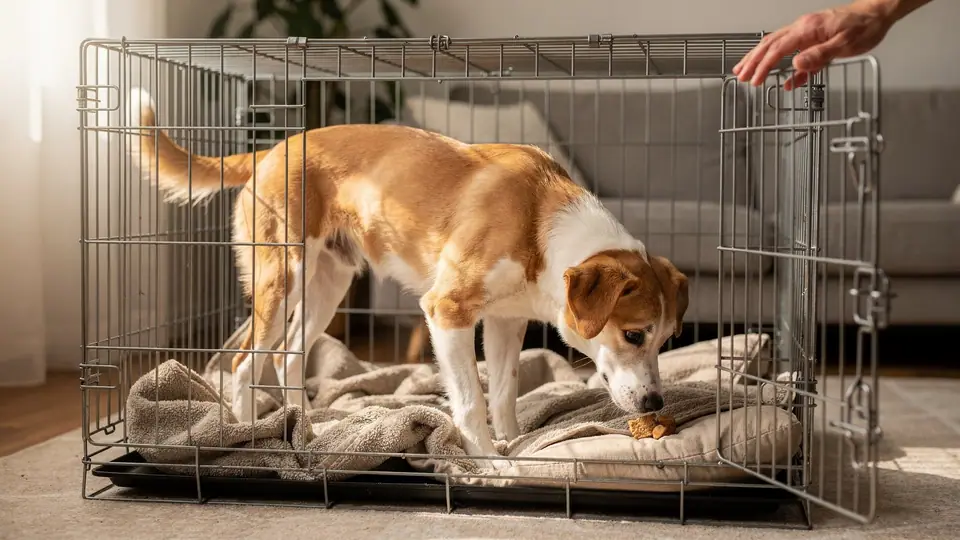
- Make the open crate worth visiting. For a few days, drop treats inside when the puppy is not looking, feed every meal in the crate with the door open and let the puppy come and go. Do not close the door yet.
- Close the door for seconds. When the puppy goes in by itself, give a long-lasting chew or a stuffed food toy. Close the door for five to ten seconds while it chews, then open it before it finishes. Repeat a few times a day.
- Build time by day. Add time in small steps: one minute, three, five, ten. Stay in the room at first, then walk out for a few seconds and come back calmly. If your puppy stays relaxed, keep going; if it starts to whine or scratch, go back one step.
- Move to nights and longer rests. When your puppy can rest for 30 to 60 minutes by day with the door closed, use the crate at night next to your bed, and for short trips out of the house. Keep some crate time when you are home, so the crate never only means goodbye.
Two or three short sessions a day are plenty. Finish each one by opening the door quietly, without a big greeting, so getting out is not the best part. Our page on calm crate release shows how to open the door so the puppy stays settled.
How long can an older puppy stay in a crate?
Once crate training is done, a healthy puppy of 5 to 9 months can usually rest in the crate for a few hours by day and sleep there through most of the night. That is the end point, not week one. During training, keep closed-door time short and always follow it with a toilet trip, a walk with plenty of sniff time and some play.
A crate is a place to rest, not a place to spend the whole day. If you work long hours, plan for a dog walker, a friend or a pen with more room, rather than more crate time.
What if my older puppy cries or tries to escape?
Some noise in the first days is common. A puppy that whines for a minute and then lies down is learning. A puppy that drools, scratches at the door, bites the bars, pants hard or tries to force its way out is panicking.
When you see panic, open the door, go back to the step where your puppy was calm and keep sessions much shorter. Never use the crate as a punishment, and do not leave a panicking puppy to “get used to it”. If panic continues after a week of easier steps, speak to a trainer. If your puppy hurts itself or seems unwell, ask your vet.
What are the usual mistakes?
- Starting with a full night. Days first, nights later. A first night shut in usually makes the crate a place to fear.
- Going too fast because the puppy is older. A bigger dog is not a calmer dog. Use the same small steps.
- Using the crate only when you leave. The puppy learns that the crate means being alone.
- Letting the puppy out while it cries. Wait for a moment of quiet, or end the session earlier next time.
- Skipping exercise. A puppy that has not had a walk, a sniff and some play will find it hard to settle anywhere.
Older puppies learn to love a crate when it means food, chews and quiet rest near the family. Next steps: the main crate training guide for time by age, calm crate release for the exit, and the adolescent dog for the rest of this stage. More on the puppy hub.
Questions on this page
Is it too late to crate train a 6 month old puppy?
No. Puppies of 5 to 9 months and adult dogs can learn to rest in a crate. It usually takes a little longer than with a young puppy because the dog is bigger and already has habits, so plan for slower steps over a few weeks.
How long does it take to crate train an older puppy?
Most older puppies are happy to go in and eat in an open crate within a few days. Calm rest with the door closed for an hour or more often takes two to four weeks of short daily practice. Go at the pace your puppy shows you.
What size crate does an older puppy need?
The puppy should be able to stand without ducking its head, turn around easily and lie flat on its side with legs stretched out. A 5 to 9 month old puppy may be close to adult size, so many owners buy the adult size now.
Should I put my older puppy in the crate at night straight away?
Only once short daytime sessions with the door closed are calm. Until then, keep the puppy in a gated room or a pen near you at night, and move to the crate when the puppy already rests well in it by day.
What if my older puppy panics in the crate?
Open the door, go back to an easier step and keep sessions much shorter. Drooling, frantic scratching, biting the bars or trying to break out are signs of panic, not protest. If they continue, speak to a trainer, and ask your vet if your puppy seems unwell or hurts itself.
Work with me
A $150 consultation or $500 monthly curatorship. Opens WhatsApp to Andrew.