
Expert Advice · Expert Advice · 9 min read
Questions to ask a dog breeder before you buy a puppy
A good breeder expects questions and asks plenty back. Use this list on the first call and at the visit: health screening, the parents, how the puppies are raised, the contract and what happens if things go wrong.

Questions to ask a dog breeder should cover five things: health screening of both parents, the mother and how she lives, how the puppies are raised, the contract, and what happens if the puppy cannot stay with you. A good breeder welcomes the questions and asks you plenty back. For what to look for at the visit itself, and how to pick one puppy from the litter, see how to choose a puppy from a litter. This page is the question list to use before and during that visit.
I am Andrew Darov, a dog trainer. I am not a veterinarian. This is a life page about choosing a breeder, not about medical tests.
What should you ask about health screening?
Start with one question: which screenings does the national breed club recommend for this breed, and have both parents had them?
Every breed has its own list. The breed club, and in the US the Canine Health Information Center (CHIC) run with the OFA, or in the UK the Kennel Club breed health pages, will tell you which checks matter for that breed. You do not need to understand each test. You need to know the list exists and the breeder follows it.
Ask:
- “Which screenings does the breed club recommend, and have both parents had them?”
- “Can I see the results?” Many results can be checked online through the scheme that issued them.
- “Have any puppies from these parents, or earlier litters, had health problems?”
- “Will the puppy have had a vet check before going home?”
Ask your vet what the results mean for this breed. A trainer or a breeder’s website is not the place to judge a health score.
What should you ask about the parents?
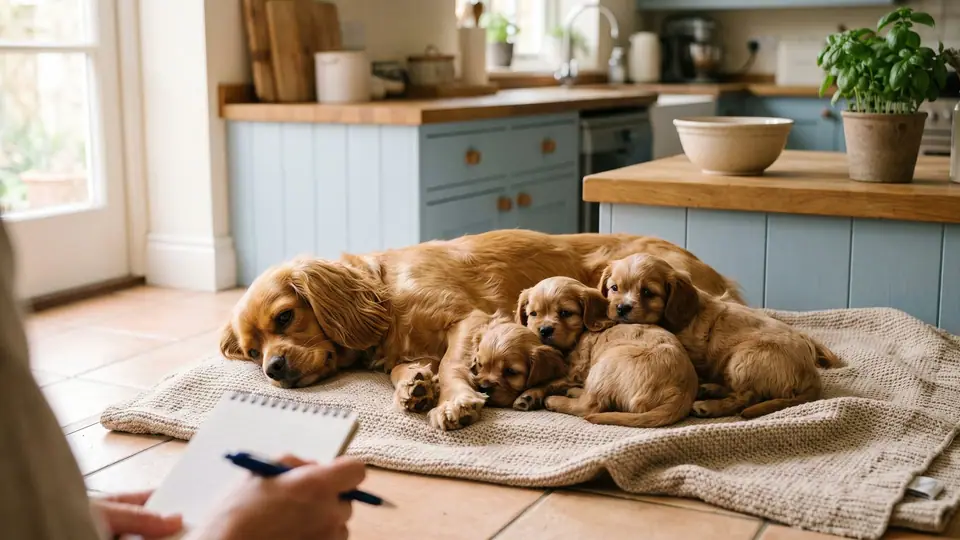
- “Can I meet the mother with the puppies?” She should be there, relaxed enough to be near visitors.
- “What is her temperament like with visitors, children and other dogs?” Watch for yourself too.
- “Who is the father, and where does he live?” Ask to see his health results and, if possible, a video of him.
- “How old is the mother, and how many litters has she had?”
- “Why did you choose this pairing?” A good answer talks about health, temperament and the breed, not just colour.
Temperament runs in families. Shy, noisy or snappy parents are worth taking seriously.
What should you ask about how the puppies are raised?
The weeks with the breeder shape the puppy you take home. Ask:
- “Where do the puppies sleep and spend the day?” Indoors with everyday household sounds is a good start. A shed or a kennel far from the house means fewer ordinary sounds and people.
- ”Who handles them, and how often?” Look for gentle daily handling, plus visits from different people, including children if possible.
- ”What new things have they met?” Floors, stairs, a car ride, the vacuum, a crate, a garden or yard. Ask for examples.
- ”Have they started on toilet or crate habits?” A separate toilet area in the pen and short crate naps help a lot in week one at home.
- ”What will you send home with the puppy?” A food list, a blanket that smells of the litter, a note on its daily routine and its vet record.
The early weeks after the puppy comes home build on this. The puppy socialization schedule covers what to add from the first week.
What should you ask about the contract and take-back?
Ask for a copy of the contract before you put down a deposit, and read it at home.
- “What happens if the puppy has a health problem in the first weeks or months?”
- “Do you take dogs back at any age if the owner cannot keep them?” Many good breeders insist on this.
- “Is the deposit refundable, and when?”
- “Are there conditions on breeding, neutering or registration?” Ask your vet about the timing of any neutering; do not take it from a contract.
- “Will you help me after the puppy goes home?” Good breeders like to hear how their puppies are doing.
Which questions belong on the first call?
Keep the first call short. Ask about health screening of both parents, whether you can meet the mother with the puppies, when the litter is due or was born, and whether the breeder takes dogs back. Those four answers tell you whether a visit is worth the trip. Save the questions about rearing, the contract and the puppy’s routine for the visit, when you can see the place and the dogs for yourself. Write the answers down after each call so you can compare two or three breeders side by side.
What will a good breeder ask you?
Expect questions about your home and garden, your work hours, other pets, children, your experience with dogs, and why you chose this breed. Some breeders keep a waiting list and want to meet you first. That is a good sign. A breeder who asks nothing, wants money by bank transfer before you have seen anything, or offers to meet in a car park is not.
What are the red flags?
- No mother to meet. “She is out on a walk” or “she is at another house” are common excuses.
- Health screening is vague. “The vet checked them” is a puppy check, not parent screening.
- Many breeds, always puppies. A seller with several breeds and puppies all year round.
- Puppies sent home very young. Offered at 5 or 6 weeks.
- Pressure to decide now. “Someone else wants this one” with a deadline.
- No contract, no take-back. Once the money has gone, you are on your own.
Use this list with how to choose a puppy from a litter for the visit, the first week home for after pick-up, and the breed guides to check the breed fits your life before you call anyone. More on the life hub.
Questions on this page
What is the most important question to ask a dog breeder?
Ask which health screenings the national breed club recommends for the breed, and whether both parents have had them. Then ask to see the results. A breeder who answers clearly and shows the paperwork is a good sign.
Can I meet the mother of the puppies?
You should be able to. Meeting the mother with her puppies, in the place they are raised, tells you a lot. The father often lives elsewhere, but the breeder should tell you who he is and show his health results.
What should be in a puppy contract?
A clear contract names the puppy, the parents and the price, lists what health checks have been done, explains what happens if the puppy has a health problem, and states whether the breeder will take the dog back at any age.
What questions will a good breeder ask me?
Expect questions about your home, work hours, other pets, children, your experience with dogs, and why you want this breed. A breeder who asks nothing and only wants a deposit is a warning sign.
At what age should a breeder let a puppy go home?
In the US and UK most breeders send puppies home at around 8 weeks, and some small breeds later. Rules differ by country and state, so check the local law. A breeder offering puppies at 5 or 6 weeks is a red flag.
Work with me
A $150 consultation or $500 monthly curatorship. Opens WhatsApp to Andrew.