
Expert Advice · Life · 7 min read
Puppy Blues: Coping With Regret and Overwhelm
You can want your puppy and still feel overwhelmed. Make the care load smaller, ask for real support and know when professional help matters.

Short answer
Puppy blues is an informal term for anxiety, regret, frustration or exhaustion after getting a puppy. Simplify essential care, arrange breaks and ask for specific help. There is no fixed recovery deadline. Persistent or severe distress deserves healthcare support; immediate safety concerns need urgent help.
Puppy blues is an informal name for feeling anxious, regretful, frustrated or worn out after bringing a puppy home. The puppy may be wanted and loved, yet the constant care and loss of freedom can still feel heavy. Struggling does not make you a bad owner, and you do not need to pretend that every minute is joyful.
This page offers a practical support plan for the household. It is not a mental-health diagnosis or treatment, and a seven-day plan is not a promise that you will feel better in a week. If distress is severe, persistent or affecting your ability to function, contact a healthcare professional. You can ask for help before things become a crisis.
What can puppy blues feel like?
Some people feel constantly on alert for an accident or a cry. Others feel irritated, miss their old life, or worry because the bond they expected is not there yet. Sleep disruption, repetitive chores and arguments about whose turn it is can make ordinary decisions feel much harder.
The American Kennel Club's report on puppy-blues research describes anxiety, frustration and weariness, including regret and difficulty bonding. It recommends talking about feelings, getting support and seeking professional help when symptoms persist. That supports taking these feelings seriously; it does not mean every struggling owner has the same condition.
Make the next hour safer and smaller
- Meet the puppy's immediate needs. Offer the usual toilet opportunity, water and a suitable rest setup. Check whether a meal is due. You do not need to teach a new skill right now.
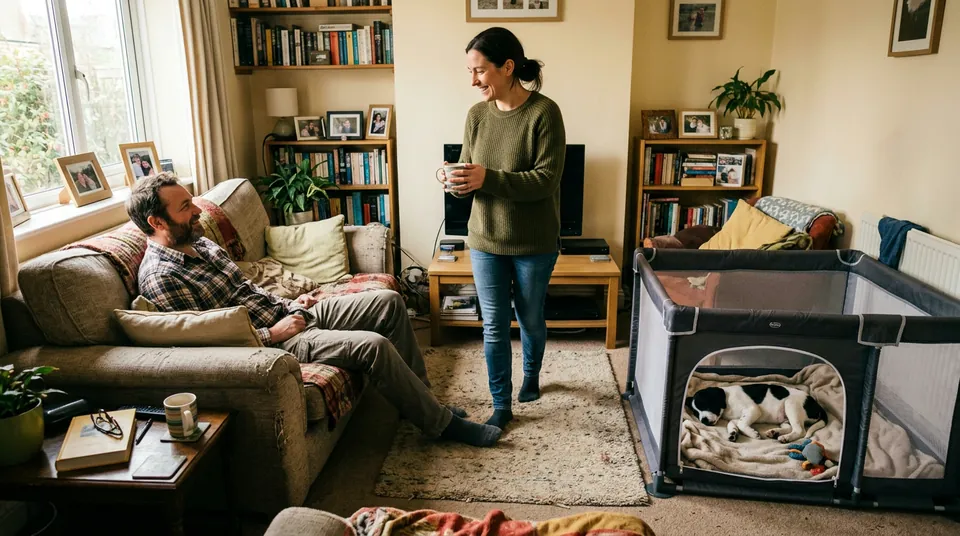
- Use safe separation. Put the puppy in a puppy-proofed pen or gated area they can cope with while you step back. Do not force an unfamiliar crate to become an emergency long confinement.
- Ask for a named job. “Can you cover the next toilet and sit nearby while the puppy rests?” is easier to act on than “I need more help.”
- Take care of one human need. Eat, shower, drink water, or sit quietly while another responsible person covers care. A break should not depend on finishing the internet's training checklist.
If you feel close to shouting or rough handling, stop the interaction. Put safe space between you and the puppy, and ask another adult to take over. A puppy's safety and your safety matter more than completing a session.
A seven-day support plan, not a deadline
| Day | One practical change | What “done” looks like |
|---|---|---|
| 1 | Tell one trusted person what is difficult | You ask for a specific care block or practical help |
| 2 | Make a minimum care sheet | Food instructions, toilet route, rest place and vet contact are written where carers can find them |
| 3 | Protect a human rest block | Someone knows exactly when they are responsible so you can switch off |
| 4 | Remove one unnecessary pressure | You cancel a visitor, mute an unhelpful feed or stop comparing training milestones |
| 5 | Get help for the hardest practical problem | A vet or reward-based trainer has a clear question, not a vague list of everything |
| 6 | Keep a small pleasant moment | Quiet company, gentle play or watching the puppy sniff, without demanding a performance |
| 7 | Review the support, not your worth as an owner | You identify what helped, what still hurts and who can help next |
You can do these out of order or repeat a day. If you are alone, the support person might be a friend, family member, suitable sitter or the rescue's support team. Check competence, hygiene and your vet's contact restrictions before handing over a young puppy. You are arranging care, not trying to prove you can do everything yourself.
A minimum puppy day is enough for now
Keep food and water, toilet opportunities, safe rest, gentle contact and appropriate veterinary care. Add only a little manageable enrichment. A puppy does not need a sightseeing tour, a new trick and three visitors because you feel guilty about being tired.
The puppy schedule by age can organise the essential loop without turning it into a rigid exam. If the hardest part is being bitten while exhausted, use biting and nipping for safe management and planned rest for the settling routine. If nights are breaking you, work on a sustainable household handover with the night plan. Do not respond by withholding water or leaving distress unanswered.
Share care without the argument
Divide tasks by times and outcomes, not by who “does more.” One person owns the early toilet, another prepares the next meal, and someone is clearly on duty during your rest block. Write down the last toilet and next likely need so the handover is real.
Keep expectations small and consistent. If one person encourages hand play and another spends the evening stopping bites, agree one household rule. The shared puppy schedule covers handovers. A short calm discussion while the puppy sleeps is more useful than negotiating during a noisy night.
What if I do not feel a bond yet?
You do not have to produce a feeling on demand. Caring actions can come before affection feels easy. Look for low-pressure time together: sitting nearby while the puppy explores a safe room, offering a chew, or playing a small game the puppy enjoys. End before either of you is overwhelmed.
Comparison is not a useful measure of attachment. A photograph does not show the sleepless night or a person's support network. You can love a puppy and dislike this stage of care. You can also need professional support rather than more reassurance from strangers.
When to get more help
- Human health: contact a doctor or mental-health professional if distress persists, feels overwhelming, affects sleep even when care is covered, or interferes with eating, work or relationships. You do not need to wait for a fixed number of days.
- Puppy health: call the vet for sudden changes, pain, illness or difficulties eating, drinking and resting. Constant distress is not automatically “just puppy behaviour.”
- Practical training: seek qualified reward-based help for the specific problem that is making daily life unmanageable.
- Immediate danger: if you might hurt yourself, someone else or the puppy, arrange immediate safe separation and get urgent help from local emergency or crisis services and a trusted person. Do not stay alone with a situation you cannot keep safe.
If you are considering rehoming
Do not let an anonymous comment section decide for you. Contact the breeder, rescue or a reputable welfare organisation and explain the full situation, including safety and care limits. They may be able to offer support or discuss responsible options. Avoid a rushed private handover to an unknown person.
Seeking help is not a moral failure. Some arrangements can improve with sleep, care cover and training; others need a different long-term decision. Make that decision with appropriate support and the welfare of both the person and puppy in view, not a promise from this page that feelings must resolve by a certain date.
Sources and scope
AKC — Can Dog Owners Experience the Puppy Blues?. Public guidance informs the safety context; sample clocks and support plans are editorial examples, not research results.
Questions on this page
Is it possible to regret getting a puppy and still care about them?
Yes. Feeling overwhelmed or missing your old routine can coexist with caring for your puppy. Take the feelings seriously, arrange practical support and seek healthcare help if distress is persistent or severe.
How long do puppy blues last?
There is no fixed deadline for an individual. The seven-day plan here organises support; it does not predict recovery. You do not have to wait a set time before asking a healthcare professional for help.
What should I do today if I am overwhelmed?
Meet immediate care needs, put the puppy in a safe setup they can cope with, ask a responsible person to cover a specific care block and attend to one of your own basic needs.
Does not feeling bonded mean I should rehome the puppy?
Not by itself. Seek practical and healthcare support as appropriate. If you are considering rehoming, discuss the full situation with the breeder, rescue or a reputable welfare organisation instead of arranging a rushed handover.
When is urgent help needed?
If you might harm yourself, another person or the puppy, arrange immediate safety and contact local emergency or crisis services and a trusted person. Do not stay alone in a situation you cannot keep safe.
Work with me
A $150 consultation or $500 monthly curatorship. Opens WhatsApp to Andrew.