Expert Advice · Expert Advice · 8 min read
How much exercise does a dog need? A daily plan
Most healthy adult dogs do well with a daily mix of walks, sniff time, short training and play, plus plenty of rest. How much depends on the dog, its type and age, and its health. More running is not always better; a calm, settled dog is the goal.
How much exercise a dog needs depends on the dog, but most healthy adult dogs do well with a daily mix of walks, sniff time, a few minutes of training and play, and plenty of rest. Many need somewhere around one to two hours of activity a day in total; very active types may need more, older and smaller dogs often less. For puppies the rules are different: see walk length by age, which covers how far a growing puppy should walk.
I am Andrew Darov, a dog trainer. I am not a veterinarian. This is a life page about daily exercise for adult dogs; if your dog has a health or joint problem, ask your vet what is safe.
How much exercise does a dog need a day?
The right amount is the amount after which your dog can settle and rest at home, not the most it can run.
There is no single number for all dogs. A rough guide for healthy adults:
- Very active working types (many herding, gundog and some terrier types) often enjoy the most, with a mix of walks, running and brain games.
- Most medium and large companion dogs do well with two or more walks a day plus play.
- Small and toy dogs still need daily walks and play, often shorter.
- Short-nosed dogs need gentle exercise, more breaks and care in warm weather.
- Older dogs usually need shorter, more frequent outings at their own pace.
Your dog’s type gives a starting point; your dog itself gives the answer. You can see typical energy notes for many types on our breed guides.
What should a good exercise day include?
Exercise is more than distance. A good day mixes:
- Walks. Brisk enough to move, slow enough to enjoy.
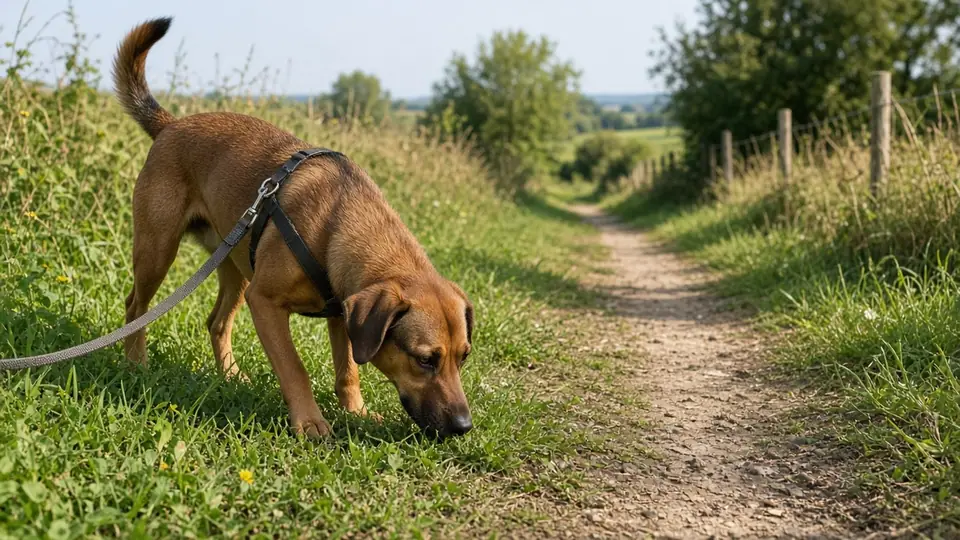
- Sniff time. Sniffing is tiring for the brain and calming for many dogs. Let your dog follow its nose on a loose lead or long line.
- Short training. Five to ten minutes of training games, such as recall, hand target or stay, work the brain.
- Play. Fetch, tug, find-it games, or play with a dog friend your dog likes.
- Rest. Adult dogs sleep a lot. Rest is when the body recovers and the brain settles.
How do you plan the daily mix, step by step?
- Start with daily walks. Two or more walks a day suit most dogs. Choose a pace your dog can keep easily, and vary the routes.
- Add sniff time. Give part of each walk to sniffing. Stop, let your dog explore, then move on. A slow sniff walk can settle a dog better than a fast march.
- Add short training and play. Five to ten minutes of games a day, at home or on walks. Short and fun beats long and tired.
- Protect rest. A quiet bed away from busy areas, and calm time after walks. Do not fill every hour with activity.
- Watch and adjust. If your dog settles well at home, the mix fits. If it is restless, add variety rather than just more running. If it is sore or slow, do less and ask your vet.
How can you tell if it is too little?
Signs your dog may need more activity or more variety:
- Chewing furniture or shoes.
- Restless pacing, and trouble settling in the evening.
- Barking at small noises.
- Pulling very hard at the start of every walk.
- Rough play or jumping on people that gets worse on quiet days.
These can have other causes too, so look at the whole day: sleep, training, time alone and health.
Can a dog get too much exercise?
Yes, and more is not always better. A dog that runs hard every day can get fitter and fitter, and then needs even more to feel tired. Too much hard exercise can also lead to sore joints and a dog that is wound up rather than calm.
Signs of too much:
- Limping or stiffness after rest.
- Lagging behind, or lying down on walks.
- Being more jumpy and excitable after outings, not calmer.
- Trouble sleeping after very busy days.
If you see limping or stiffness, rest your dog and ask your vet. See when to call the vet.
How does exercise change with age?
Teenage dogs (roughly six to eighteen months) often seem to have endless energy, but they still need rest and short training, not just more running. The adolescent 6–12 months page covers that stage. Older dogs often prefer shorter, gentler walks, more sniffing and easy brain games; senior dog manners refresh has ideas.
What are the usual mistakes?
- Only fast walks. Add sniff time; it tires the brain and calms many dogs.
- Trying to tire the dog out with running alone. It can build a fitter dog that needs even more.
- Skipping rest. A busy day needs quiet time to follow it.
- The same walk every day. New routes and smells are part of the exercise.
- Pushing through soreness. Rest your dog and ask your vet if it limps or slows down.
The best exercise plan leaves your dog content and able to rest. Next steps: walk length by age for puppies, adolescent 6–12 months for teenage dogs, and the breed guides for type-by-type energy notes. More on the life hub.
Questions on this page
How much exercise does a dog need a day?
There is no single number. Many healthy adult dogs do well with somewhere around one to two hours of activity a day, split into walks, sniff time, play and short training. Some need more, many older or small dogs need less. Ask your vet what suits your dog.
Is walking enough exercise for a dog?
For many dogs, yes, if walks include time to sniff and explore. Add a few minutes of training and play for the brain. Very active types may also need running or longer outings, built up slowly.
How do I know if my dog is getting enough exercise?
A dog with enough activity can settle and rest at home after a walk. Signs it may need more variety include chewing things, restless pacing, barking at small noises, and pulling hard at the start of every walk.
Can a dog get too much exercise?
Yes. Too much hard exercise can leave a dog tired, sore, wound up or unable to rest. Signs include limping, stiffness after rest, lagging behind, and being more jumpy instead of calmer. Build up slowly and ask your vet if you notice them.
Does sniffing count as exercise?
Sniffing is tiring for the brain and helps many dogs relax. A slow walk with lots of sniff time can settle a dog better than a fast march. Mix sniff walks with brisker walks and play.
Work with me
A $150 consultation or $500 monthly curatorship. Opens WhatsApp to Andrew.